News
Madrid Fusión Alimentos de España hosts the sixth edition of its wine conference
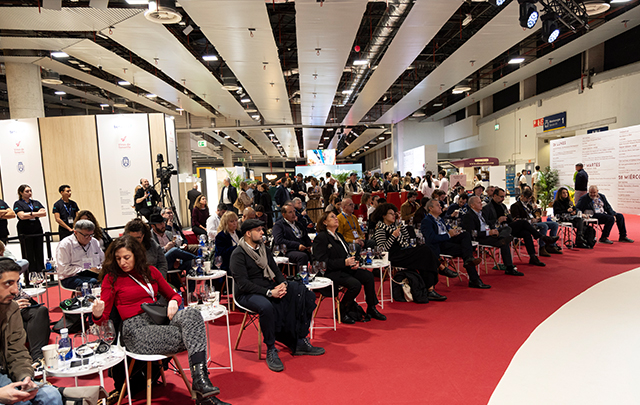
Tuesday began with heavy rain in Madrid, inviting the public to travel to warmer climates. Fernando Mora MW and Bernat Voraviu, founder of Ithaca Wines (Barcelona), explored the deep origins of Tenerife wines through the sea and its volcanoes.
‘In June, the first edition of the Island Wines Congress will be held in Tenerife’, he announced. With this premise, and to whet the appetite, the oenologist from Bodegas Frontonio wanted to explore the volcanic diversity of the island through the glass.
Through a journey through the unique identity of Canarian wines, with Tenerife as a benchmark for innovation and landscape on the international map, the Master of Wine led this session of the Island Wines Summit dedicated to this archipelago.
‘Innovation that works is what becomes tradition’, Mora argued. ‘And that is what happens in Tenerife's vineyards with the braided cordon’. Different microclimates, multiple varieties and a unique training system are just some of the unique features that place Tenerife on the Atlantic horizon of Spanish wine: ‘One island, a thousand possible wines’.
During the Tenerife wine tasting, attendees were able to discover everything from ancestral listanes to high-altitude wines from heroic vineyards that defy the Atlantic. ‘The progression of white wine in the Canary Islands is unmatched by any other region; no other region has advanced so much’, said the sommelier.
The truth about the Pérez family
Benjamín Lana, director of Madrid Fusión Alimentos de España, brought together four members of the Pérez family who have left their mark on modern Spanish viticulture for a large family tasting: Sara Pérez (Mas Martinet, Priorat), Willy Pérez (Bodegas Luis Pérez and Bodegas De la Riva, Jerez de la Frontera), Raúl Pérez (the nomad of Bierzo), and Borja Pérez (La Guancha, Tenerife).
The event sought to celebrate how a common surname has become synonymous with excellence, terroir and oenological revolution, from the mineral reds of Priorat to the volcanic soils of Tenerife, via the renaissance of the historic vineyards of Marco de Jerez. A generational journey that demonstrated the diversity and power of Spanish wine today.
Journalist Alberto Luchini, presenter of the wine conference, pointed out that there are 800,000 people in Spain whose first surname is Pérez. A fairly common surname which, however, is leading the wine revolution in our country. Lana spoke of a ‘Perezista movement’ that is democratising restaurant wine lists, and whose statutes are shared: the vineyard rules, wine is a cultural asset, the plot matters, creating wine is creating community, recovering is not going backwards, less solemnity, more truth.
‘These Pérez have not been chosen by a committee of experts, they have been chosen by genetics, each one has emerged from their native vineyard’, said the director of Madrid Fusión Alimentos de España, while suggesting that each producer should not talk about themselves but about one of their colleagues.
‘Typicality is the least sensitive word that exists; in wine, the most important thing is to represent the space’, declared Raúl Pérez, representative of the silent revolution in Bierzo. The oenologist referred to Sara Pérez's wines as those he always wanted to resemble: ‘Sara has taught us that behind wines there is a great style, a personal way of seeing them’.
The admiration among all the Pérez family members was clearly demonstrated in the speakers' affectionate statements about their colleagues: ‘What happened in Tenerife was a revolution. Canarian wines are now in a category of their own, and Borja is largely responsible for that’, said Willy Pérez about his colleague from Tenerife.
Can machines beat humans?
Ferran Centelles took to the stage again at The Wine Edition Wines from Spain to put Mario Ayllón to the test against Artificial Intelligence. It was a friendly competition in which the sommelier from Berria (Madrid), one of the most promising names on the current scene, faced off against AI applied to food pairing, alongside Emilio Suárez (Jarana), entrepreneur and expert in creating gastronomic experiences.
In a dynamic, participatory format with a few surprises, the audience took part in a tasting competition in which they had to decide which of the proposed pairings was better: the one devised by the sommelier or the one developed by Artificial Intelligence. ‘AI is not here to replace the sommelier, but to improve their skills and provide methods and systems’, said the digital sommelier created by Centelles for this tasting, a sort of Captain Spock with an Argentine accent. ‘The message is clear: AI is a complementary tool. If we manage to create synergy with it, we will improve our productivity’, added Suárez.
The conclusion, after the pairing battle, was that AI, although it can be of great help to us, cannot convey the warmth and emotion of a human being. At least for now. However, once again, the key was provided by Captain Spock the sommelier: ‘The future of sommeliering is not about choosing between intuition or technology, but about learning to combine them’.
Star pairings
Rubén Hernández Mosquero and Miguel Ángel Millán, sommelier and chef at EMi, proposed a high-level Vinomio that brought the essence of the recently starred Madrid restaurant to the auditorium of The Wine Edition Wines from Spain.
For 60 minutes, the world's best sommelier (former sommelier at DiverXO) and the chef from Extremadura engaged in a live dialogue, and created unpredictable harmonies between Rubén's technical cuisine of ferments, broths and seaweed, and Millán's unique wine cellar, composed of small producers, historical rarities and single-vineyard wines. A live masterclass that demonstrated how wine and haute cuisine can be reinvented together in real time.
Millán summed up the philosophy behind his work at the EMi winery in one sentence: ‘We can keep that unique bottle and wait for someone to ask for it, but a nicer option is to share it, because sharing is an implicit feeling of a bottle of wine’. Pairings that are always different and often personalised, following three paths: perfection, exploration, and emotion.
A wine with María José López de Heredia
Early on Tuesday afternoon, Master of Wine Fernando Mora interviewed María José López de Heredia, CEO of Viña Tondonia (La Rioja, Spain), in a theoretical session that aimed to show the more human side of the director of the iconic winery.
María José López de Heredia, fourth generation at the helm of this historic Rioja winery founded in 1877, defends the classic production methods that have made wines such as Viña Tondonia legendary. The talk explored family tradition, respect for the vineyard, and the essence of supreme Rioja, in an expert dialogue on authenticity and wine-making heritage. ‘Not even I can talk about the history of my house, because I don't know it all’, she said.
Regarding the Civil War, the winemaker recalled that her offices were located in what is now the ground floor of the Hotel Urban in Madrid. ‘We still have glass bottles with the González Byass brand, because there was a time when it was very difficult to get bottles and we had to avoid taxes’.
149 years do not happen overnight. The family history of R. López de Heredia is based on an exchange of cultures and life experiences, successes but also failures. It is a history that has the word “effort” engraved on its skin. ‘In Haro, they say that no one dares to write the history of the Barrio de la Estación because it is very poorly documented’, she warned.
Amidst memories, historical anecdotes and opinions about the past, present and future of wine, María José lamented that people who visit the original winery take away the wrong impression, because it is not a winery for tasting wine, but for drinking it: ‘We shouldn't talk so much about wine, it has to speak for itself; when we describe it, we limit it’.
It was a relaxed and enjoyable chat that brought back memories that had been forgotten, such as the agricultural past of R. López de Heredia: ‘Our father lost money on the farm all his life, he made a living from the winery. He had a chicken coop for clarification and also sold eggs, so he saved some money. We always said that he had got the business off the ground thanks to the eggs’, she said with a laugh.
Tuscany in a glass
The landscapes, flavours, and aromas that inspire the cuisine of Il Piccolo Principe, a two-Michelin-star restaurant in Viareggio, Italy, brought the second day of The Wine Edition Wines from Spain to a close. Chef Giuseppe Mancino and sommelier Bernat Voraviu, founder of Ithaca Wines (Barcelona), turned each wine and each dish into a little story of the Tuscan Sea and land, where tradition and haute cuisine meet at the same table.
On this gastronomic journey through Tuscany, attendees were able to discover, through four pairings, a cuisine made with love and good raw materials, supported by a biodynamic vegetable garden and a luxury hotel complex that promotes a 360-degree experience. Gastronomy with a carnivorous origin that Il Piccolo Principe tries to reproduce with products such as raw meat, seasonal fish, vegetables, and legumes that customers do not eat every day.
Among the wines that paired with Mancino's cuisine were a classic Chianti, a Sangiovese vinified in Roman amphorae, a variety that Voraviu defined as ‘the great Tuscan diva’, and another long-aged wine, and a ‘meditation wine’, a Vinsanto, a historic sweet wine that is increasingly rare in Tuscany: a journey through the Italian terroir that closed the second day of the conference with a nod to the Florentine dolce vita.
Related news
News
Madrid Fusión Alimentos de España relaunches its leadership as a comprehensive meeting platform for the international gastronomic community
News
Toni Massanés: ‘The cuisine of tomorrow will be sustainable or it will not be
‘We spend more than two hours a day on TikTok and we can't find two minutes to make a parsley omelette’, laments the creator of the Alicia Foundation
News
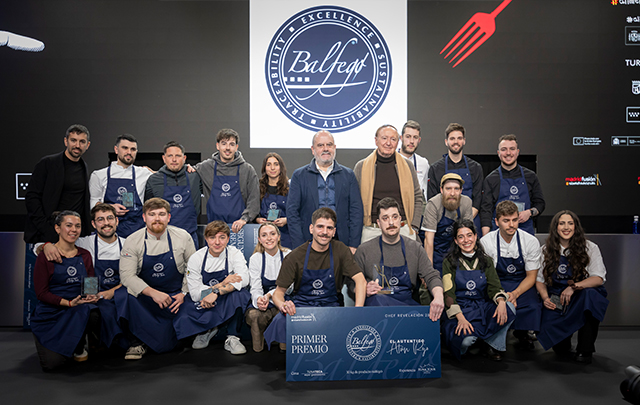
Javier Ochoa and Garikoitz Arruabarrena (Masta Taberna) win the Revelation Chef award for their haute cuisine without pretensions
News
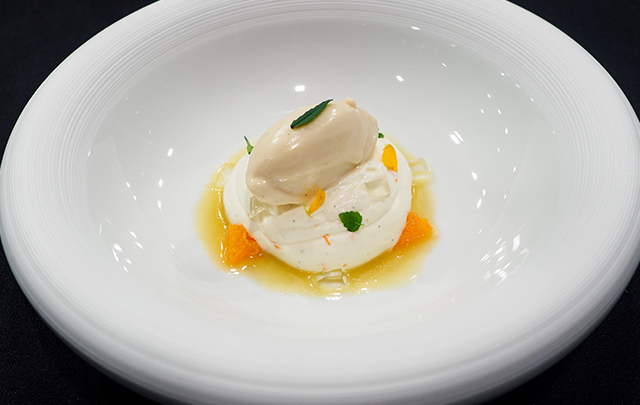
A Christmas-inspired dessert wins the Revelation Pastry Chef Award
Miguel Yeste, from the Madrid bakery Obrar, wins the coveted Madrid Fusión award
News
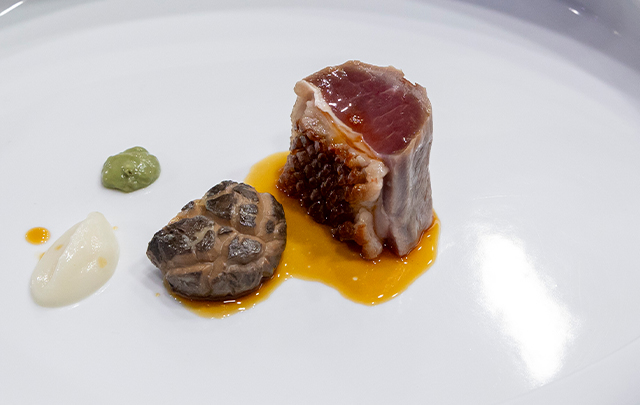
Good kilometre product
Madrid, the Neapolitan countryside, and the Philippines are stops on a gastronomic journey in which the protagonists focus on quality and relationships, rather than distance from the source
News
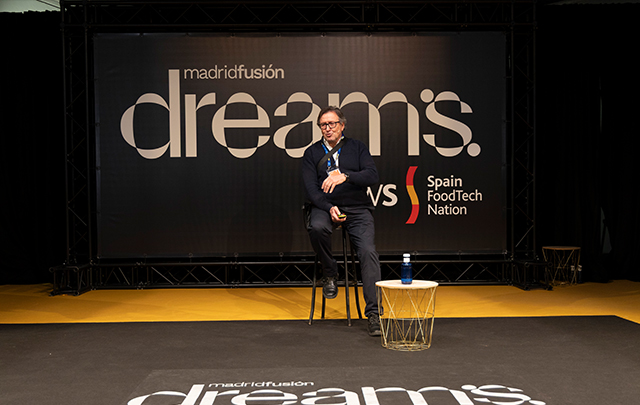
‘Salt and human health’: Science and the marine diet
Carlos Duarte reviews the millennial role of salt in well-being, health, and the economy for thousands of years at Dreams in Madrid Fusión
News
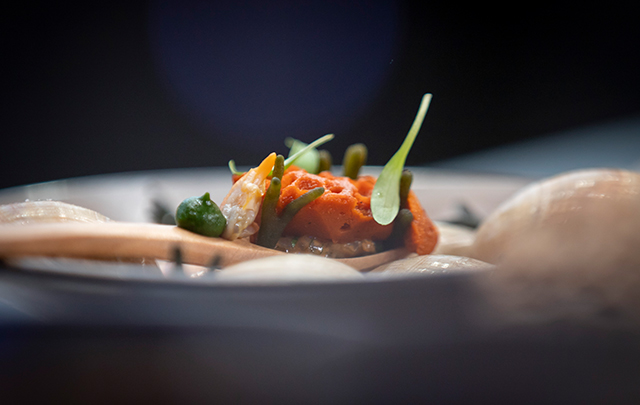
A philosophy inspired by nature
Gil Fernandes' cuisine, nestled between cliffs and forests, draws on local produce that the chef gathers with his own hands
News
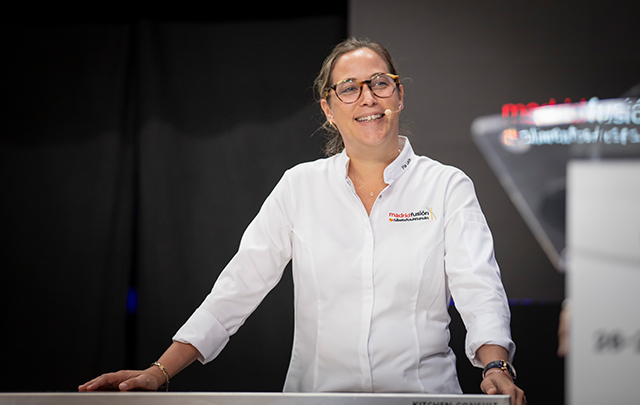
All the flavours of Peru on one table
Chef Pía León researches the uses of little-explored ingredients, which she also uses not only for cooking in her restaurant Kjolle
News
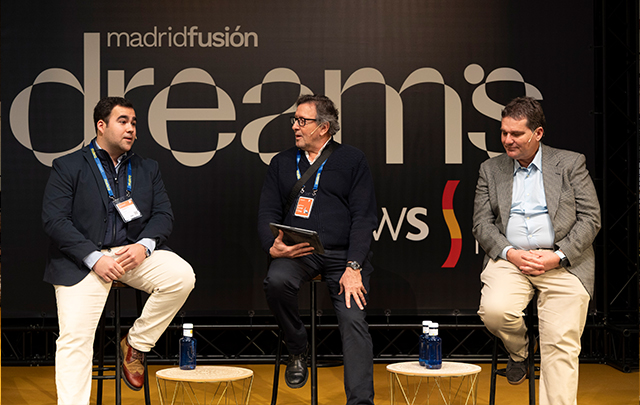
Genetic vertigo to create the food of the future
José Miguel Mulet, Professor of Biochemistry and Molecular Biology at the Polytechnic University of Valencia, speaks about genetic modification applied to food in the Dreams section of Madrid Fusión
News