News
Good kilometre product
Madrid, the Neapolitan countryside, and the Philippines are stops on a gastronomic journey in which the protagonists focus on quality and relationships, rather than distance from the source
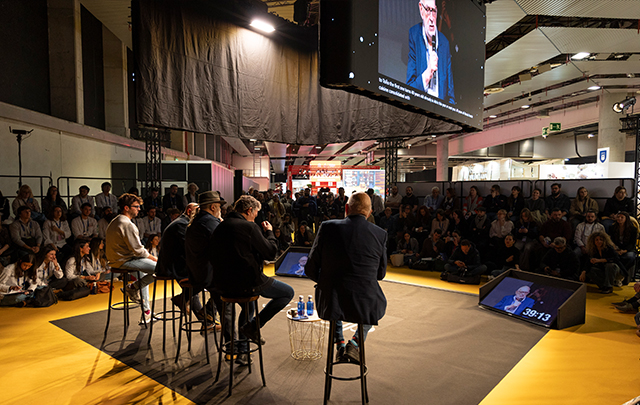
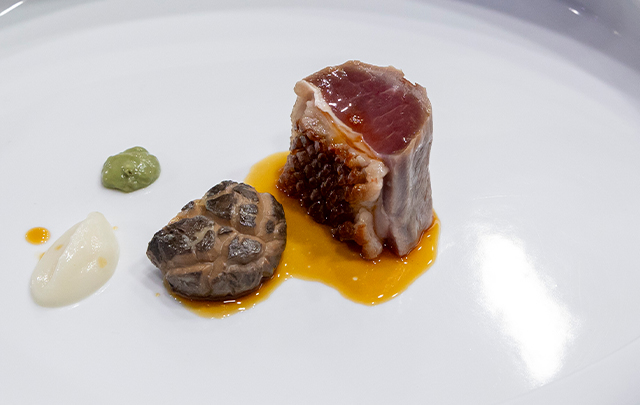
‘I believe in good kilometres, not zero, because we go where the good things are. I don't know how to work without good ingredients. Then comes technique, always at their service’. This statement by Giusseppe Iannotti serves as a link between three of the presentations given on the last morning of Madrid Fusión Alimentos de España 2026. In Madrid, in the Neapolitan countryside or in the Philippines, chefs are also committed to using the best possible products, without always looking at their origin. It is possible to enjoy roast lamb or sweetbreads in a Castilian oven in a paradisiacal enclave 70 kilometres from Manila, and today this has been demonstrated.
Control in the form of a memory
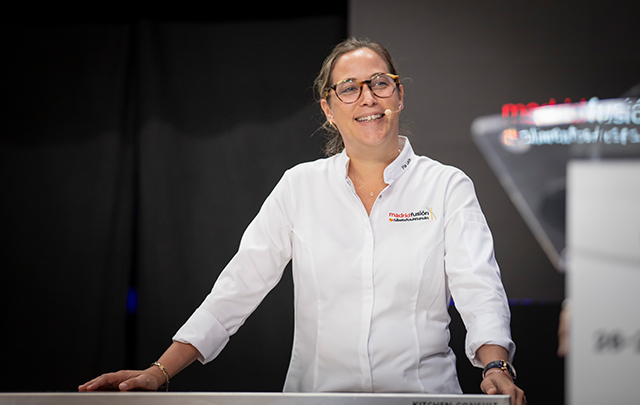
Sergio Tofe (Éter*, Madrid) and his presentation “Creating memories in a cosmopolitan Madrid” opened this third morning. The chef believes that ‘all the effort makes sense when the customer sits down at the table and takes control with decisions and confidence. When a memory is true, control no longer lies with the chef but with the diner’.
Before reaching this conclusion, Tofe outlined the main principles of a cuisine based on five biological cycles of nature itself, which give rise to five menus named after goddesses: ‘We self-destruct the dishes in order to recreate them’. To do this, they rely on ‘a network of people, suppliers, with products that come from very close by and also from very far away. That sustainability is consistency, not just proximity. That network that believes in the same rhythm as us is what makes our cuisine possible. Without producers, without fishermen, without farmers... neither Éter, nor its menus, nor its memories would exist’. Regarding zero kilometre, he stated that ‘for us, what is important is the relationship with the ingredient and not the distance’.
Based on the premise that ‘creating memories is an act of freedom’, Éter ‘cooks with its window open to the world. It is not born from a theory, but from a specific place (the restaurant was run by his mother for years), so it is a consequence’.
In his restaurant, Tofe cooks from the mixture and not from the origin, but he gives the dish centre stage. He is committed to the ‘tasting menu, the best way to plant the first emotion of the first bite together with the last; and with the menu it is not possible to plant that emotion’. And being aware of the importance of ‘the memory of taste, the memory that is generated in the diner with a bite. We cook to activate memories, not to reproduce them’.
A customer who does not take control
‘In my restaurant, the customer does not take control. They decide to come and visit us, but for us it is very important to be able to work on an experience. They will be at the centre of our activity, but they don't know what will happen, only what they will pay’. Giusseppe Iannotti (Krésios**, Telese Terme, Italy) was emphatic during his presentation “Echo in Sannio”. In a village in the heart of the Neapolitan countryside, Iannotti offers a daily blind tasting menu of 35 courses. The customer ‘tells us about any allergies or intolerances, can tell us if they don't like something or if they want something specific... they have that freedom, but we do what we want’, he said sincerely.
The customer, of course, is treated with the utmost respect. People aren't interested in whether a chef dreamed up a recipe one night... people come to have a good time, and we mustn't interrupt or disturb a couple who are enjoying themselves. We work hard on technique, but the customer must be at the centre. We have a research laboratory, but that won't interest them and we don't tell them anything about it’. In those 35 courses, ‘the most important ingredient is rhythm, because the main problem is boredom. It's a question of philosophy, but also of physics and chemistry, because digestion can't begin in the middle of the menu’.
‘Luxury is not money, but time. We have become accustomed to buying things and space, but time is impossible’, he added.
‘I like chaos, I like people not understanding me, because if they did quickly, it would mean I'm simple’, he acknowledged, as he presented one of those dishes that serve as a hook: a cheese pasta eaten with a silicone spoon on a plate featuring the figure of Mickey Mouse. ‘At my house, people dress how they want, and the first ten courses are eaten with your hands’, he said, downplaying his two Michelin stars.
From coconut to lamb
Chele González (Gallery by Chele*, Manila; and Asador Alfonso*, Cavite, Philippines) acknowledged that the customer, at least in his restaurant, has taken control. This is probably due to the Michelin stars that change everything. “From coconut to lamb in Southeast Asia” was the title of the talk given by a ‘chef with Spanish blood and a Filipino heart’ who has put that country on the world gastronomic map: ‘I am a key chef in this gastronomic revolution’.
The Cantabrian has two flagship businesses with two very different lines, and he dedicated his presentation to them. The first part focused on coconut, as the current menu at Gallery by Chele revolves around this food: ‘Every year, a product and its bioproducts are the stars of the menu, which is now an exercise in sustainability. Coconut is known as “the tree of life” because of its gastronomic use, but also because of its presence in other areas of everyday life. That expression gives the menu its name’.
‘Without coconut, Southeast Asian cuisine would not be possible’, he said, before preparing a wide variety of recipes live with coconut as the star ingredient. ‘Sometimes, we do things out of context’, he acknowledged, as he presented cheeses made with coconut milk.
As for Asador Alfonso, it is a spectacular location with an eight-thousand-kilogram Castilian oven. ‘The oven is part of our culture and is the only one of its kind in Asia. Eighty per cent of each tasting menu goes through the oven, which we use with wood and fire. We do Spanish haute cuisine, not fusion, with Spanish products, from tear peas to sweetbreads and suckling lamb. The spectacular setting means that people are willing to pay what it costs, because it's very expensive’.
Does the customer take control? ‘This is the best example of how it has been, because we have had to divide the space into two restaurants, with Asador Alfonso and its nine tables, where we practise haute cuisine and a lot of technique, and another à la carte restaurant with more popular recipes’.
Related news
News
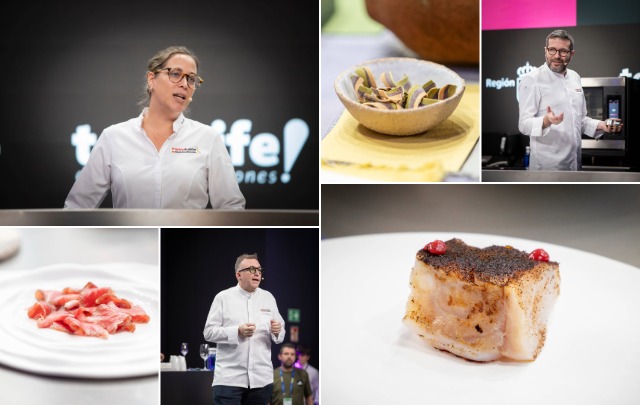
Madrid Fusión Alimentos de España relaunches its leadership as a comprehensive meeting platform for the international gastronomic community
News
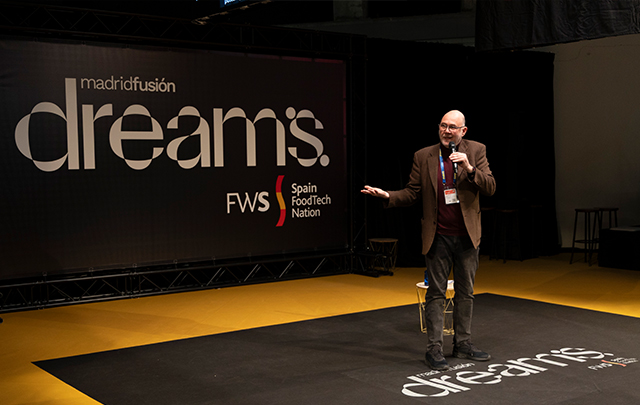
Toni Massanés: ‘The cuisine of tomorrow will be sustainable or it will not be
‘We spend more than two hours a day on TikTok and we can't find two minutes to make a parsley omelette’, laments the creator of the Alicia Foundation
News
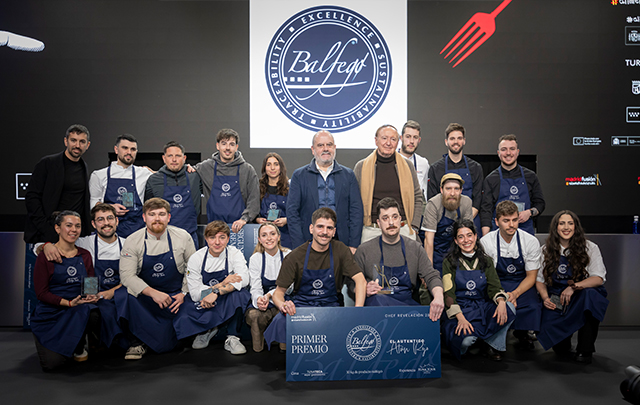
Javier Ochoa and Garikoitz Arruabarrena (Masta Taberna) win the Revelation Chef award for their haute cuisine without pretensions
News
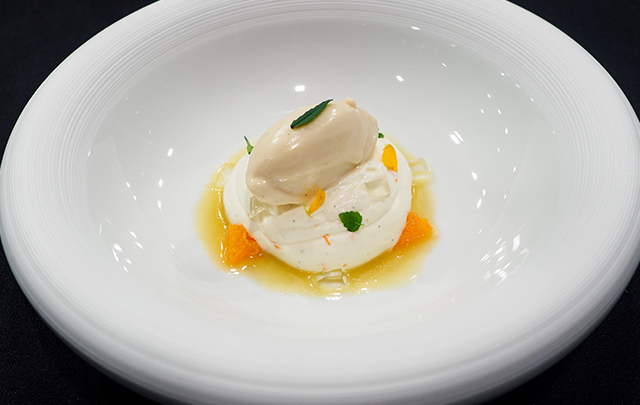
A Christmas-inspired dessert wins the Revelation Pastry Chef Award
Miguel Yeste, from the Madrid bakery Obrar, wins the coveted Madrid Fusión award
News
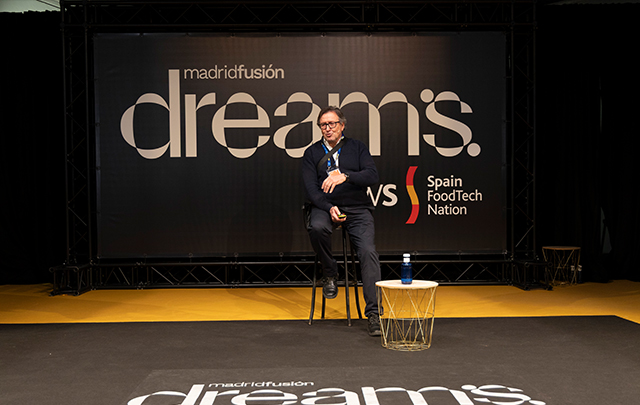
‘Salt and human health’: Science and the marine diet
Carlos Duarte reviews the millennial role of salt in well-being, health, and the economy for thousands of years at Dreams in Madrid Fusión
News
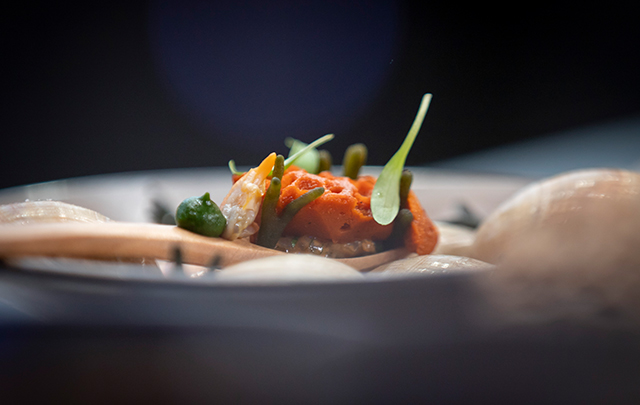
A philosophy inspired by nature
Gil Fernandes' cuisine, nestled between cliffs and forests, draws on local produce that the chef gathers with his own hands
News
All the flavours of Peru on one table
Chef Pía León researches the uses of little-explored ingredients, which she also uses not only for cooking in her restaurant Kjolle
News

Genetic vertigo to create the food of the future
José Miguel Mulet, Professor of Biochemistry and Molecular Biology at the Polytechnic University of Valencia, speaks about genetic modification applied to food in the Dreams section of Madrid Fusión
News
Chefs warn at Madrid Fusión of the clash between legislation and gastronomic reality
News