News
All the flavours of Peru on one table
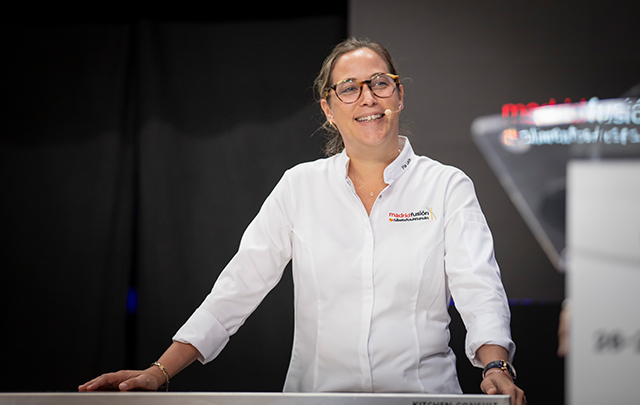
Chef Pía León researches the uses of little-explored ingredients, which she also uses not only for cooking in her restaurant Kjolle
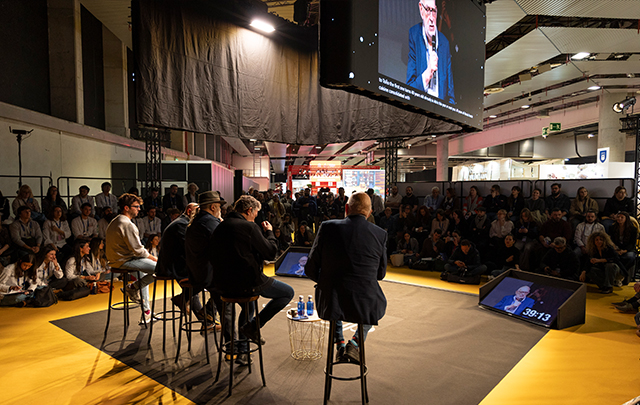
In a corner of Lima, all the geographies of Peru can be found, accessible through flavour, in ‘nine moments’, says chef Pía León, from the Kjolle restaurant, in the Madrid Fusión auditorium. The first approach, upon arrival, is in the way the table is set, with colourful tablecloths welcoming diners. ‘These fabrics have been dyed with botanicals: plants, flowers and leaves, processed in our research centre’, explains León, during the presentation “A broad view. Diverse resources”. ‘It's not just about the product, but about many decisions in which some 150 people are involved’. The vegetables are freeze-dried so they can be worked with. They are embroidered onto the tablecloths, while the leaves, seeds, and veins of the cacao are turned into dishes. ‘Usually, only 15% of the cacao is used. We use about 85%’. Other fruits, such as copoazú and macambo, are used to make a cream, which is then cut to produce what is known as Amazonian white chocolate.
The sweet is placed on top of the fabrics, plated in handcrafted containers made from cocoa shells, the usual waste that is rescued as part of León's credo. ‘It's a platform for what we do. We are involved in 40 projects, from catalogues of roots and tubers or plants for medicinal use, to something similar to a cold storage facility from the Inca era, which we have updated with technology’, says León, as he shows off the bars of fruit, which all look like exquisite chocolates.
‘This is how we preserve tubers, roots, seeds, and fruits, always looking towards the mountains so that the cold wind comes in and keeps them cool and dehydrated’, he continues. ‘It is important to look to the past in order to apply it. Sometimes, the past brings solutions. We want to keep ancestral traditions and techniques alive’.
One of the formulas found in her laboratory is the reduction of copoazú extract, ‘to avoid using sugars’, ‘These elements do not exist in isolation. Everything has been thought out and worked on as a group with many people and a lot of time invested, a lot of dialogue and communication. What matters to us is to build strong and lasting bonds with the communities’.
Shared control
Chef León, who has been cooking for 17 years, reflected on how and how much she ceded control of her restaurant to the customer. ‘Thanks to my experience, I can read the tourists who visit us, who represent the vast majority of those who come. It's complicated because every mind is unique, but there are two types. Those who come with high expectations and those who arrive with great curiosity’, says León. ‘At first, before visiting us, the customer is in control, researching, changing their routine, getting on a plane and arriving in Lima. When they enter the restaurant, we take back control and offer them a journey, which they may or may not follow. We don't impose it, because the idea is for them to feel comfortable and free’.
Then comes the part where they are already at the table and the power is shared. ‘We both gain something. We gain experience and reflection, because new things are always happening. They decide what they want to keep, what they want to leave behind, and what they want to use to transform their lives’.
Related news
News
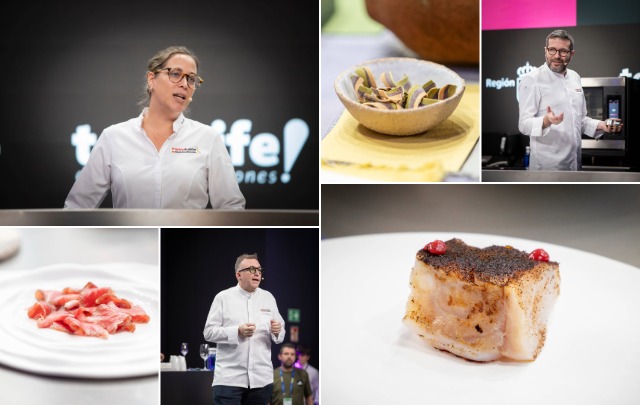
Madrid Fusión Alimentos de España relaunches its leadership as a comprehensive meeting platform for the international gastronomic community
News
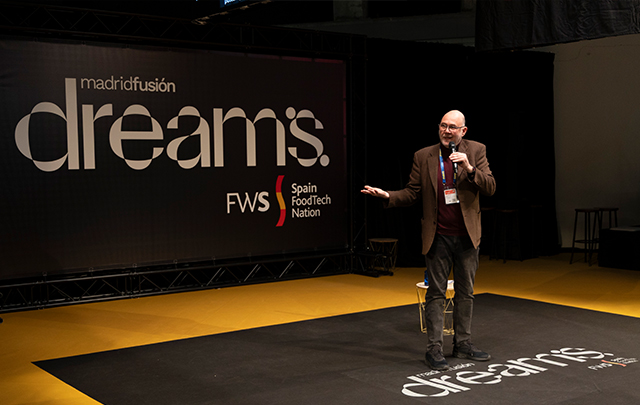
Toni Massanés: ‘The cuisine of tomorrow will be sustainable or it will not be
‘We spend more than two hours a day on TikTok and we can't find two minutes to make a parsley omelette’, laments the creator of the Alicia Foundation
News
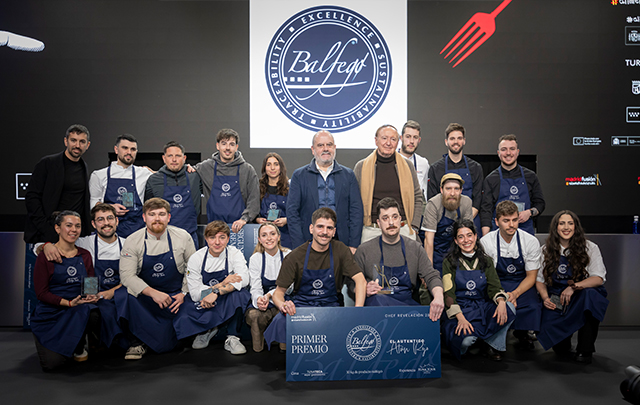
Javier Ochoa and Garikoitz Arruabarrena (Masta Taberna) win the Revelation Chef award for their haute cuisine without pretensions
News
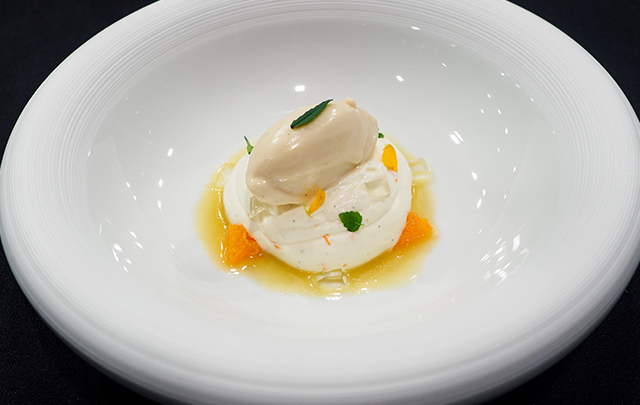
A Christmas-inspired dessert wins the Revelation Pastry Chef Award
Miguel Yeste, from the Madrid bakery Obrar, wins the coveted Madrid Fusión award
News
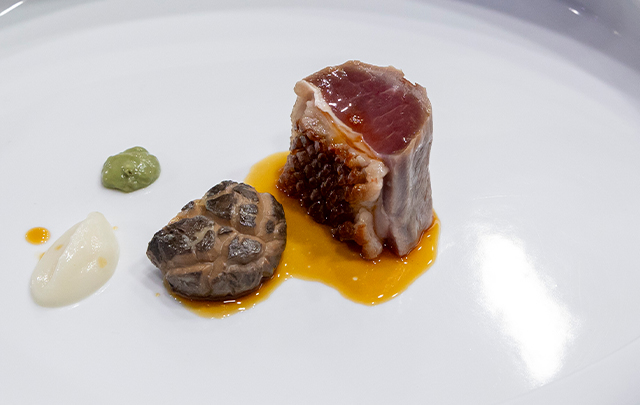
Good kilometre product
Madrid, the Neapolitan countryside, and the Philippines are stops on a gastronomic journey in which the protagonists focus on quality and relationships, rather than distance from the source
News
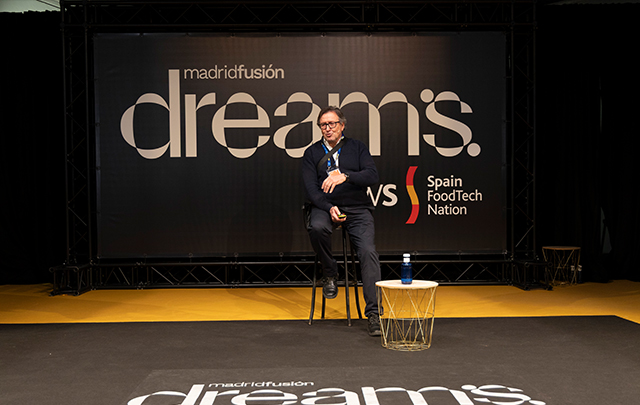
‘Salt and human health’: Science and the marine diet
Carlos Duarte reviews the millennial role of salt in well-being, health, and the economy for thousands of years at Dreams in Madrid Fusión
News
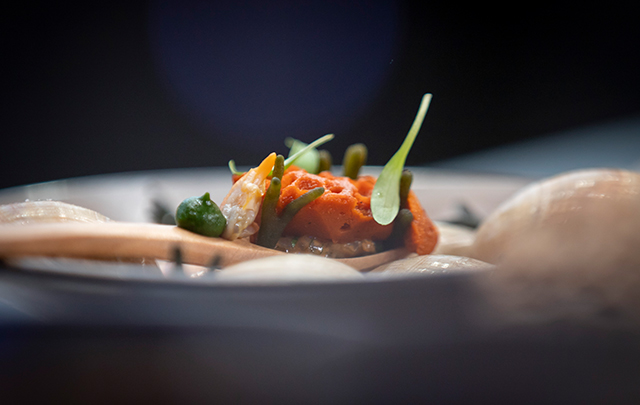
A philosophy inspired by nature
Gil Fernandes' cuisine, nestled between cliffs and forests, draws on local produce that the chef gathers with his own hands
News
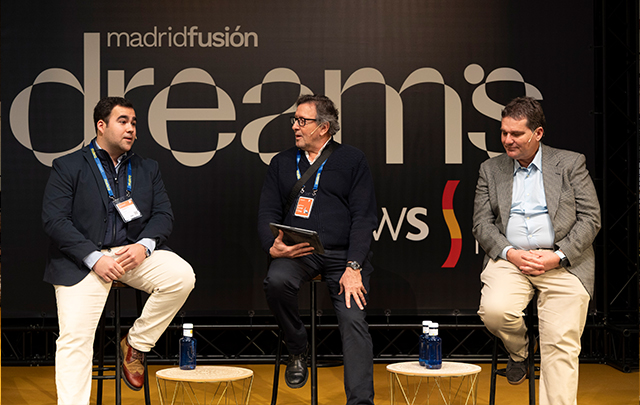
Genetic vertigo to create the food of the future
José Miguel Mulet, Professor of Biochemistry and Molecular Biology at the Polytechnic University of Valencia, speaks about genetic modification applied to food in the Dreams section of Madrid Fusión
News
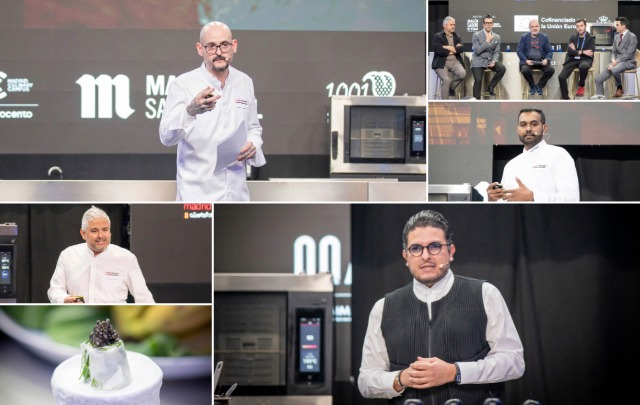
Chefs warn at Madrid Fusión of the clash between legislation and gastronomic reality
News