News
Chefs warn at Madrid Fusión of the clash between legislation and gastronomic reality
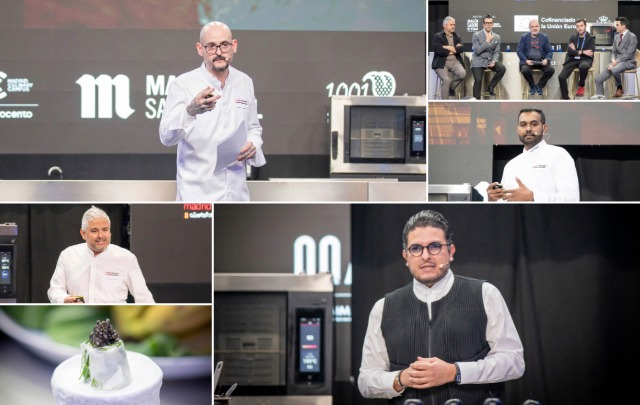
The second day of Madrid Fusión Alimentos de España continued to focus on the diner, but without neglecting some of the most current gastronomic trends, such as product-based cuisine, green cuisine, and the revival of offal. It was a day in which big names such as Aitor Zabala, Akrame Benallal, Ricard Camarena, and Bas van Kranen also shone.
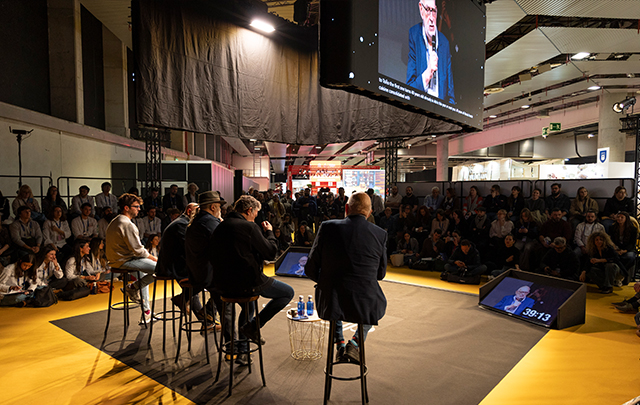
The sustainability of the gastronomic business and the future of the culinary profession were also discussed in a round table debate by the maître d' at Saddle* (Madrid), Israel Ramírez, and chefs Ricard Camarena (Ricard Camarena**, Valencia), Quique Dacosta (Quique Dacosta Restaurant *** , Dénia, Alicante), and Nandu Jubany (Can Jubany*, Calldetenes, Barcelona); also discussed the sustainability of the gastronomic business and the future of the culinary profession. They addressed the crisis in the restaurant sector, and complained about regulations that reduce the sector's efficiency. Quique Dacosta called for a ‘direct interlocutor’ in order to ‘preserve and care for what represents a historical and cultural heritage, the Spain brand, the product we sell to the world, which is gastronomy’. Camarena added that ‘when legislating, very different cases are lumped together in a very large bag, and generalised solutions do not fix anything. Trying to include all types of restaurants in a hospitality agreement is impossible’. Camarena continued: ‘The current legislation does not provide solutions to problems. The most important asset is the workers. The employee is the one who holds the reins. When I open a restaurant, my biggest fear is that my staff will be stolen from me. For now, the system does not allow people to progress and earn money’. For his part, Israel Ramírez also emphasised the issue of training, pointing out that ‘the curriculum has not been updated for so long that it talks about things that no longer happen and does not mention technologies’.
Jubany, who has been a regular on the main stage, acknowledged the importance of the diner, stating that ‘even if you are the best chef in the world, without customers, there is no restaurant’. The Catalan chef was emphatic in a presentation in which he shared his business vision, demonstrating that ‘a haute cuisine restaurant can be profitable’. Jubany was very open, even projecting his business figures and revealing some of the keys to his success, such as sharing data with his team, and involving them in the business. It was a true exercise in transparency and realism, with which Nandu Jubany demonstrated that gastronomy is creativity, but also business. ‘I have always been clear that customers are and will always be the main ingredient in any business’, said the chef, who, aware of this, takes special care of his relationship with his most regular customers, ‘with whom we have created a club with certain advantages, because when things go wrong, it's good to have taken care of your regulars’.
In contrast to this business-oriented view of gastronomy, French-Algerian chef Akrame Benallal (Akrame*, Paris) offered a more artistic perspective, stating that his sources of inspiration are fashion and aesthetics: ‘I like aesthetics to serve cuisine, and not the other way around’. But Benallal was not the only foreign chef at the event. The international representation was led by Dutch chef Bas Van Kranen (Flore**, Amsterdam), who took advantage of the Madrid Fusión stage to defend ecosystems and highlight the importance of local products and producers. His menu is based ‘on the ingredients. First, we research them and then we create the dish. To do this, we learn how it has been harvested and how the people in the area live and eat’, he explained. The international section also paid tribute to traditional recipes and ingredients, as demonstrated by Japanese chef Tomohiko Kuchiiwa (Kuchiiwa Soba, Toyama, Japan), who showcased the uniqueness of the buckwheat used in his soba; Mano Thevar, chef at Thevar** (Singapore), who presents traditional ingredients using contemporary techniques; and chef Rafa Costa e Silva (Lasai**, Rio de Janeiro), recreating the Carioca vegetable garden and pantry, as a faithful ambassador for his city, in an edition in which Rio is the International Guest Destination.
And from Los Angeles, but of Basque-Catalan origin, Aitor Zabala visited the congress for the first time to tell us how the decisions he has made since arriving in the United States have shaped what Somni is today, a restaurant that, after just a few months in business, already has three Michelin stars. It is a restaurant that is difficult to define precisely, because Zabala is convinced that ‘not having a label for my cuisine or cooking without a predetermined concept is not a negative thing’. That is why he understands that ‘cooking is deciding’.
From greens to offal
Environment and memory were once again the focus of some of today's presentations. Ignacio Echapresto addressed the environment, explaining in detail the farm project they have created at Venta Moncalvillo (Daroca de Rioja) to complement and feed their vegetable garden. Alejandro Ibáñez (Barahonda, Yecla, Murcia) spoke about memory, as his cuisine updates traditional recipes. ‘Without memory, we are nothing’, he said about a culinary essence that ‘does not consist of deconstructing or reinterpreting dishes, but rather of compiling the history, sensations, flavour and texture of a recipe and, based on that, creating a dish that evokes and captures those sensations and memories’.
Pablo Sánchez (Los Marinos José, Málaga), a newcomer to the congress, and at the helm of a restaurant dedicated exclusively to fish and seafood located on Carvajal beach in Fuengirola, focused on discovering seafood offal which, according to him, ‘has never been valued as it is now’. Offal was also the central theme of the presentation by Argentinean Dante Liporace (Mercado de Liniers, Buenos Aires, Argentina), who spoke about offal from the pampas. Even Chinese chef Vicky Cheng surprised attendees with his treatment of fish guts, subjecting them to a process of drying and rehydration, to turn them into one of the tastiest and most sought-after dishes by customers at his Wing* restaurant in Hong Kong.
The green note of the day was provided by Madrid chef Coco Montes (Pabú*), for whom ‘the daily challenge is to capture the perfect moment of each ingredient before it disappears’, in order to offer the most authentic and respectful vegetable cuisine. And Jesús Camacho (Donaire*, Costa Adeje, Tenerife) showcased his unique project, inspired by all his pastry-making expertise acquired over the years, a signature cuisine where pastry techniques enter savoury cooking and vice versa.
Healing foods, technology and training at Dreams
In addition to agrotech and the impact of AI on gastronomic information, the Dreams #SpainFoodTechNation stage focused on two major themes on its second day: medical gastronomy and the talent of young chefs, who ensure a successful future for Spanish haute cuisine, as Albert Adrià pointed out: ‘There have never been so many young people ready to start a business in the restaurant industry’. There was also talk of sports gastronomy, discovering how our elite athletes eat to optimise their sporting performance. Health was also the focus of the presentation ‘Food as Medicine’, a concept that should have a more holistic approach and not be limited to supplementation, according to the scientific director of the Alícia Foundation, Elena Roura.
AI in the world of wine and the power of terroir
Benjamín Lana, director of Madrid Fusión Alimentos de España, brought together four Pérez family members who have left their mark on modern Spanish viticulture for a grand family tasting: Sara Pérez (Mas Martinet, Priorat), Willy Pérez (Bodegas Luis Pérez and Bodegas De la Riva, Jerez de la Frontera), Raúl Pérez (the nomad of Bierzo) and Borja Pérez (La Guancha, Tenerife). All of them have emphasised that the personality of wine lies in the terroir.
The Wine Edition Wines from Spain also offered an unusual competition between sommelier Mario Ayllón and Artificial Intelligence, demonstrating how the synergy between intuition and technology will shape the future of food and wine pairings. ‘AI is a complementary tool; if we manage to create synergy with it, we will improve our productivity’, added Emilio Suárez (Jarana), entrepreneur and expert in creating gastronomic experiences.
Light desserts and traditional sweets
On the second day of the dessert and bread stage, Madrid Fusión Pastry allowed us to discover the lightness of Asian desserts with pastry chef Borja García (Akita Foods, Madrid), who applies ‘traditional Asian techniques, with less sugar and fat, which improve some traditional Western recipes’. Ricardo Vélez (Moulin Chocolat, Madrid) also revisited desserts with the presentation of his Iberian puff pastries, made with Iberian lard from Guijuelo, because ‘its high oleic acid content is healthier than that of butter’. Chocolate was also a must, with renowned Milanese pastry chef Gianluca Fusto advocating ‘maximum flavour density without redundancy’.
Related news
News
Madrid Fusión Alimentos de España relaunches its leadership as a comprehensive meeting platform for the international gastronomic community
News
Toni Massanés: ‘The cuisine of tomorrow will be sustainable or it will not be
‘We spend more than two hours a day on TikTok and we can't find two minutes to make a parsley omelette’, laments the creator of the Alicia Foundation
News
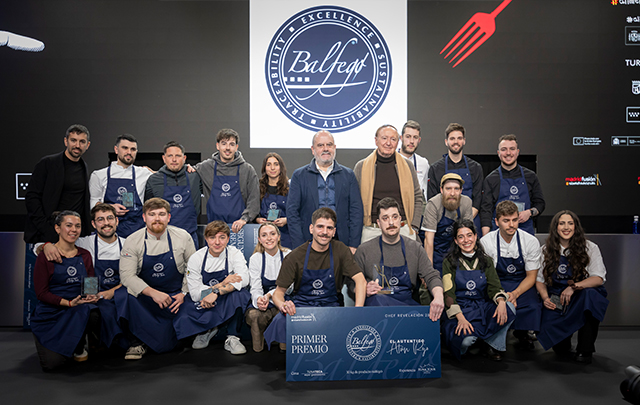
Javier Ochoa and Garikoitz Arruabarrena (Masta Taberna) win the Revelation Chef award for their haute cuisine without pretensions
News
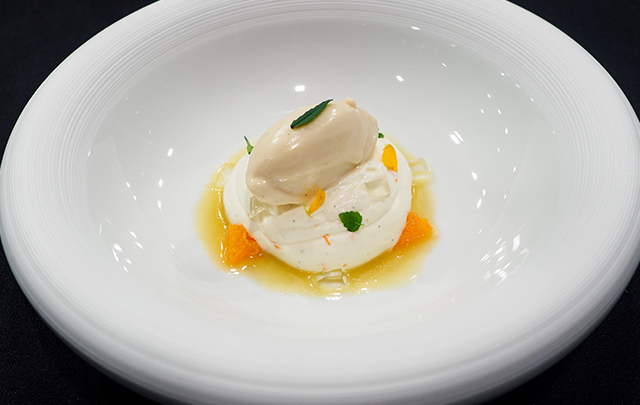
A Christmas-inspired dessert wins the Revelation Pastry Chef Award
Miguel Yeste, from the Madrid bakery Obrar, wins the coveted Madrid Fusión award
News
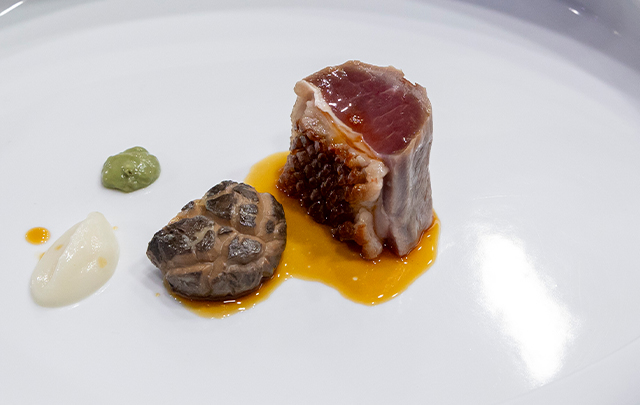
Good kilometre product
Madrid, the Neapolitan countryside, and the Philippines are stops on a gastronomic journey in which the protagonists focus on quality and relationships, rather than distance from the source
News
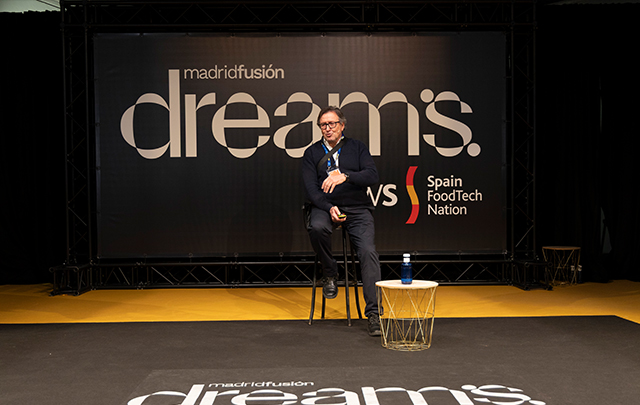
‘Salt and human health’: Science and the marine diet
Carlos Duarte reviews the millennial role of salt in well-being, health, and the economy for thousands of years at Dreams in Madrid Fusión
News
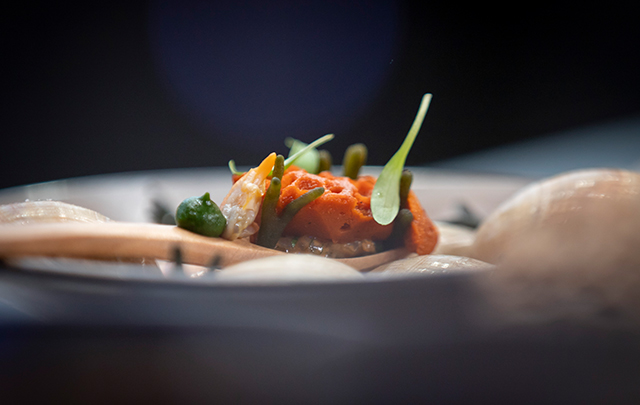
A philosophy inspired by nature
Gil Fernandes' cuisine, nestled between cliffs and forests, draws on local produce that the chef gathers with his own hands
News
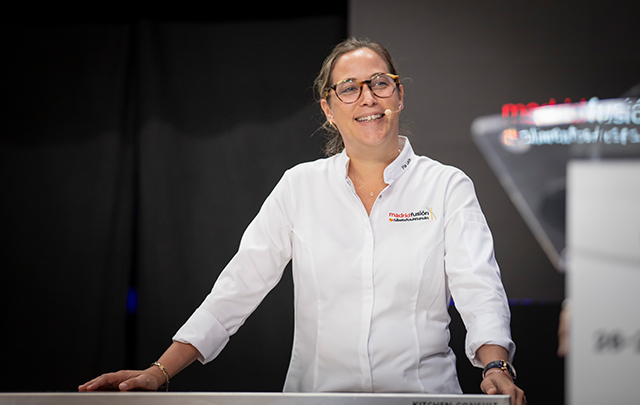
All the flavours of Peru on one table
Chef Pía León researches the uses of little-explored ingredients, which she also uses not only for cooking in her restaurant Kjolle
News
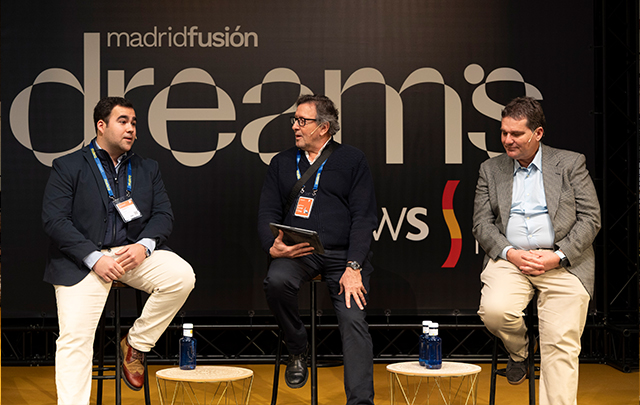
Genetic vertigo to create the food of the future
José Miguel Mulet, Professor of Biochemistry and Molecular Biology at the Polytechnic University of Valencia, speaks about genetic modification applied to food in the Dreams section of Madrid Fusión
News