News
Jordi Roca: ‘Carbonara banana is the best way to annoy Italians’
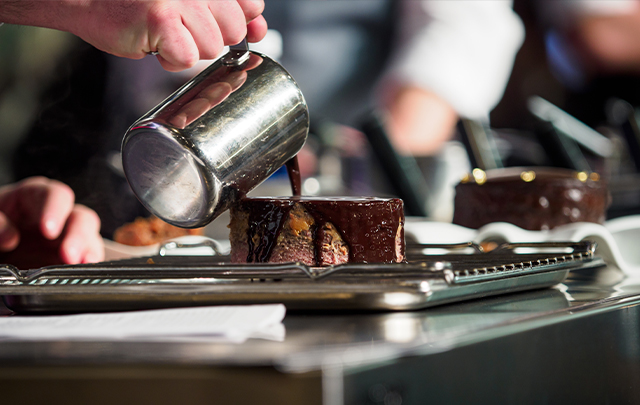
Appetisers and main courses inspired by pastries, and desserts inspired by savoury recipes: this is the dialogue between the chefs at El Celler de Can Roca
At the table, dessert is usually the end of the gastronomic journey. At Can Roca, the Roca brothers' restaurant in Girona, sweet dishes are also the beginning of various culinary adventures that end up becoming savoury dishes, inspired by the sweetness of the dessert. ‘How does savoury influence sweet?’ asks Joan Roca, chef at El Celler de Can Roca, at Pastry Madrid Fusión. ‘It's a dialogue between sweet and savoury cuisine, which goes back a long way, to a pigeon with orange peel and pine nuts, looking like a cream terrine, practically a dessert. We served it as a first course. From there, we did a review that has to do with that dialogue’.
In this exploration, almost like an epic alchemist's quest to turn one thing into another, the Roca brothers created a foie gras nougat, ‘the most important dish of this first stage’, in which they replaced the fat from nuts with foie gras and added cocoa. ‘It's still around today; it's an appetiser that illustrates this concept’. Another starting point was a condesa, ‘a savoury dish with sweet textures’, with truffle and asparagus ice cream.
Chromaticism
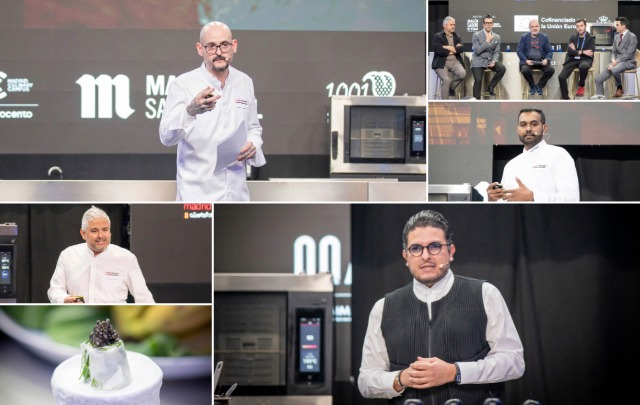
Then came the ‘play of chromaticism’, with dishes in strong reds, yellows, and greens. ‘We use that to make salads, but it started with desserts’, says Joan Roca, who gives way to his brother Jordi, the pastry chef at Can Roca. ‘When people have already eaten and drunk, everything that comes after is a gift, a “bonus track”, and we offer unusual things’, says Jordi Roca on stage during the conference “The sweet-savoury cuisine of El Celler de Can Roca”.
‘Chromaticism is based on combining elements of the same flavour in a dish. If it's going to be green, it's made with green things, such as lettuce, cucumber, basil, eucalyptus, avocado, lime, peas", he explains, showing a dish in which some elements seem to float in the air, due to the effect of water that froze when it fell on the other ingredients, like sleet on tree leaves. ‘We did it with eucalyptus water kept in a freezer at five degrees below zero, which put the water in a very critical state’.
Another chromatic game colours the dish orange with carrots, mandarins, courgettes, apricots... ‘I like desserts with a low percentage of sweetness’, explains Jordi Roca. ‘Pairing vegetables is a game, and you have to discover which one provides that texture, that flavour’.
Everything you shouldn't do
Then the colours guided them to turn a dish sweet that ‘could perfectly well be savoury’, says Jordi Roca, based on mushrooms and sunflower seeds. Or on asparagus or corn ferments. Of all these, he chose to prepare a “banana carbonara” on stage, with a cream emulsion, smoked bacon and ‘everything you shouldn't do with a carbonara’, says Jordi Roca. ‘The hot banana is cut into small slices and caramelised. When it starts to smoke, it is cut with coffee. Two worlds come together. Carbonara with tiramisu. Carbonara banana is the best way to piss off Italians. I really like it, they are very temperamental’. A variation of this recipe includes white truffle. ‘It's like pasta, but it's a banana’, certifies Joan Roca.
The inventions can be inspired by a cinnamon roll with baked sliced pear, which ‘is like a mille-feuille, with reduced cream that makes it creamy when you eat it. Because of its bitterness, it became a starter’. Or a suckling pig tatin ‘with turnips grown in Girona that taste like apples’, says Joan Roca. ‘When they brought them to us, we wondered what to do with them. We cooked the ribs at a low temperature, seared the skin to make it crispy and use it as a base, and topped it with apples cooked in red wine’. A low-temperature delicacy that ‘makes you think that dialogue with pastry is coming back’, reflects Joan Roca. And, for the finale, cauliflower cream. ‘You eat this dessert and you fall to the floor’, says Jordi Roca.
Related news
News
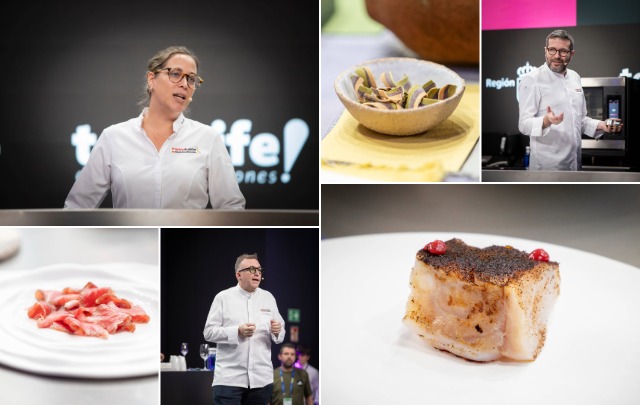
Madrid Fusión Alimentos de España relaunches its leadership as a comprehensive meeting platform for the international gastronomic community
News
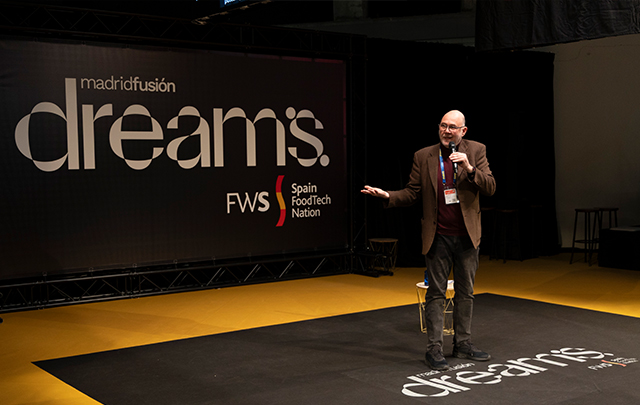
Toni Massanés: ‘The cuisine of tomorrow will be sustainable or it will not be
‘We spend more than two hours a day on TikTok and we can't find two minutes to make a parsley omelette’, laments the creator of the Alicia Foundation
News
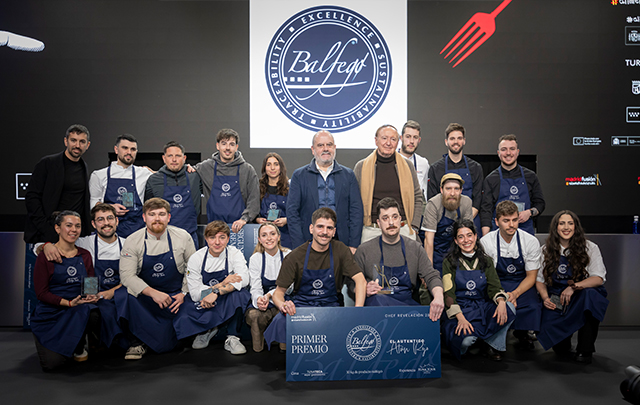
Javier Ochoa and Garikoitz Arruabarrena (Masta Taberna) win the Revelation Chef award for their haute cuisine without pretensions
News
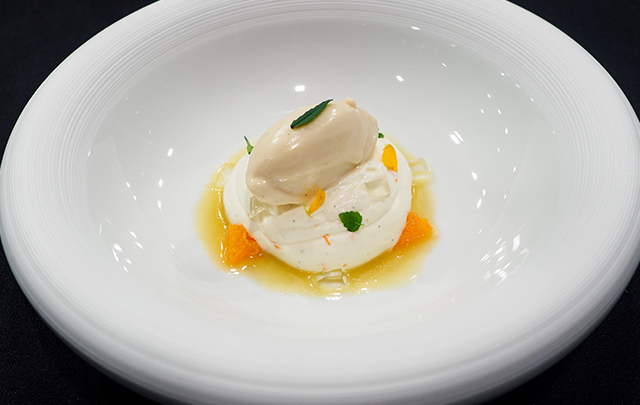
A Christmas-inspired dessert wins the Revelation Pastry Chef Award
Miguel Yeste, from the Madrid bakery Obrar, wins the coveted Madrid Fusión award
News
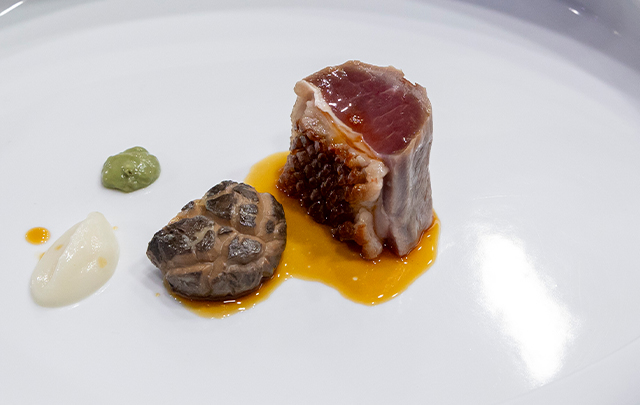
Good kilometre product
Madrid, the Neapolitan countryside, and the Philippines are stops on a gastronomic journey in which the protagonists focus on quality and relationships, rather than distance from the source
News
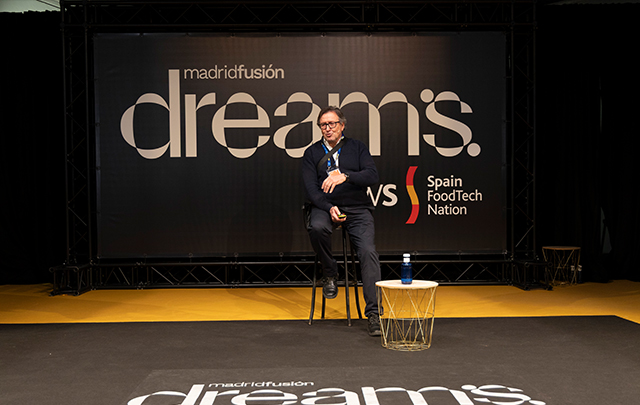
‘Salt and human health’: Science and the marine diet
Carlos Duarte reviews the millennial role of salt in well-being, health, and the economy for thousands of years at Dreams in Madrid Fusión
News
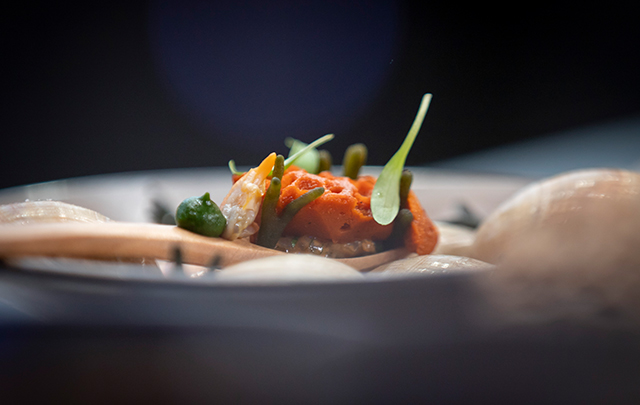
A philosophy inspired by nature
Gil Fernandes' cuisine, nestled between cliffs and forests, draws on local produce that the chef gathers with his own hands
News
All the flavours of Peru on one table
Chef Pía León researches the uses of little-explored ingredients, which she also uses not only for cooking in her restaurant Kjolle
News

Genetic vertigo to create the food of the future
José Miguel Mulet, Professor of Biochemistry and Molecular Biology at the Polytechnic University of Valencia, speaks about genetic modification applied to food in the Dreams section of Madrid Fusión
News