News
Is the best fish the one that is served fresh from the sea?

Three chefs explain the advantages of maturing sea bass, grouper, and turbot in cold storage. ‘The flavour and texture are much better
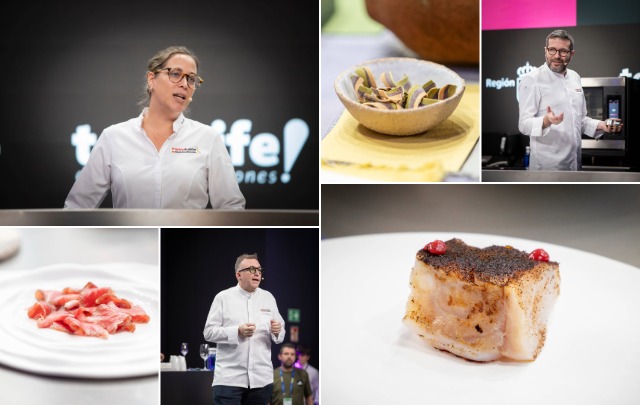
It has always been said that the best fish is the one fresh from the sea. But there are myths that do not stand up to a Madrid Fusión session, such as the one seen this Tuesday on the benefits of maturing fish at a round table in the Dreams space, in which three chefs who are experts in cooking fish on the grill, stewed, or raw participated: Jerónimo Athuel, Brazilian chef at the Ocyá restaurant in Rio de Janeiro; Diego Schattenhoffer, an Argentinean based in the Canary Islands and chef at the Taste 1973 restaurant (with one Michelin star) in Aroa, Tenerife; and Carlos del Portillo, chef at the Bistronómika restaurant in Madrid.
Moderated by food journalist Jesús Lens, the talk was very lively from the moment Lens asked the audience if they knew what fish maturation was. Only three people raised their hands. Athuel cleared up any doubts for the rest. ‘It's a way of keeping fish fresh and maintaining its quality for longer. But this can only be done if the fish is of high quality. ‘Without quality, there is no maturation’, he said.
Maturation requires the fish (whole or cut up as it comes out of the sea or scaled and gutted) to be kept in a cold room at a temperature of between -0.5ºC and 2ºC, under conditions that allow the fish to lose water. A one-kilo red mullet only needs two days of maturation; a two-kilo sole does well with three or four days; a 20-kilo grouper takes ten days, but there are larger fish such as tuna and swordfish, that chefs like Schattenhoffer subject to extreme maturation of several months at his restaurant in Aroa.
With maturation, the fish reaches the table and the diner's palate at the optimum point of flavour and texture. Carlos del Portillo said that at Bistronómika he matures hake, sea bass, monkfish, turbot, grouper, and red mullet. ‘The aim is for the fish to reach its purest essence, to be at its optimum point. And that optimum point is not when you take it out of the sea. With a certain amount of maturation, the fish gains in flavour and texture. That grouper that just arrived is still in rigor mortis and needs to rest, which is a word I like better than maturing, so that it loses moisture’. He insists: ‘A two-kilo sole is impossible to eat fresh, it's rock hard, it's like a board, you can't even cut into it with a knife. We scale it, gut it, and remove all traces of blood, and it loses that excess water and “rigor mortis”. And when you serve it after resting, you put the knife in and when you take it out, it's like taking it out of a Five Jotas acorn-fed ham’, he explains.
‘They were amazed by the flavour’
In his restaurant, he says that there have been diners who, after being served sea bass with all the flavour and texture that the maturing process offers, have said to him: ‘Damn, Carlos, I've never eaten sea bass before’. That's the difference.
Del Portillo assures us that anyone can mature the fish they buy in the morning at home. ‘Those who have tried leaving it to rest in the fridge for two or three days and then cooking it have been amazed by the flavour and texture. In just two days, the fish has improved’, summarised the Madrid-based chef, who believes there is still a long way to go in this field. ‘We are still taking the first steps’.
The three chefs almost jumped down the moderator's throat when he asked if maturation involves the same process as salting. ‘Noooo! This has nothing to do with salt’, they exclaimed.
Both Athuel and Schattenhoffer insisted on the importance of high-quality fish, because it is that quality that maturation preserves from the moment the fish leaves the sea until it is served at the table. ‘The magic of maturation lies in maintaining the quality that fish offers us’.
Related news
News
Madrid Fusión Alimentos de España relaunches its leadership as a comprehensive meeting platform for the international gastronomic community
News

Toni Massanés: ‘The cuisine of tomorrow will be sustainable or it will not be
‘We spend more than two hours a day on TikTok and we can't find two minutes to make a parsley omelette’, laments the creator of the Alicia Foundation
News
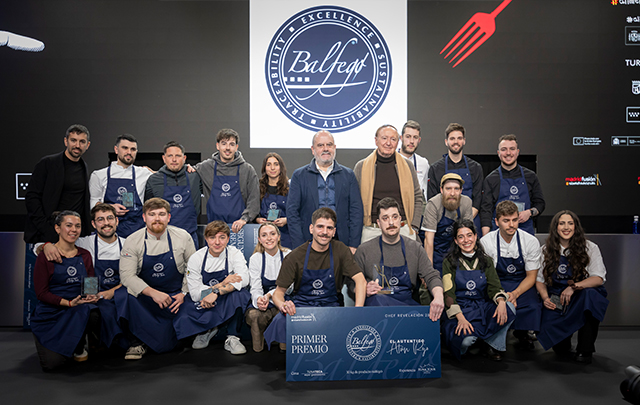
Javier Ochoa and Garikoitz Arruabarrena (Masta Taberna) win the Revelation Chef award for their haute cuisine without pretensions
News
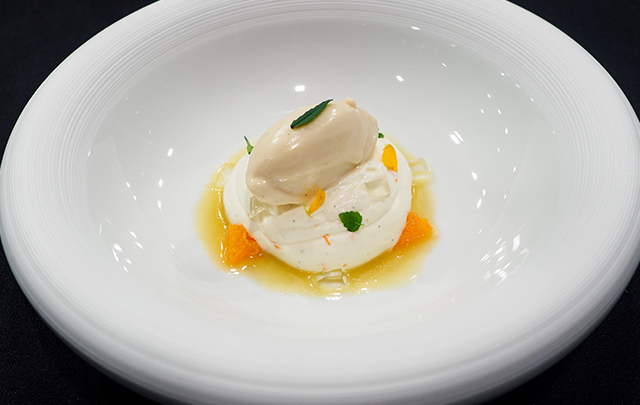
A Christmas-inspired dessert wins the Revelation Pastry Chef Award
Miguel Yeste, from the Madrid bakery Obrar, wins the coveted Madrid Fusión award
News
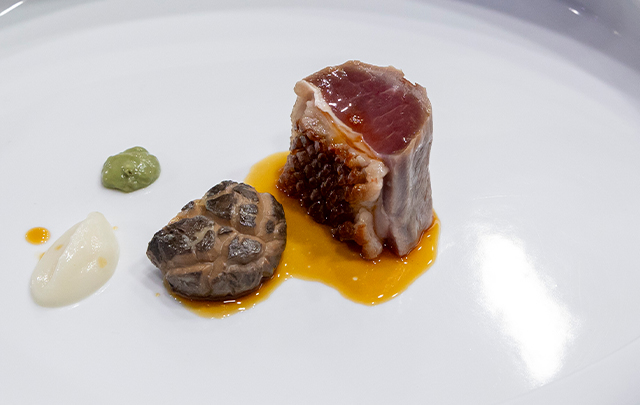
Good kilometre product
Madrid, the Neapolitan countryside, and the Philippines are stops on a gastronomic journey in which the protagonists focus on quality and relationships, rather than distance from the source
News

‘Salt and human health’: Science and the marine diet
Carlos Duarte reviews the millennial role of salt in well-being, health, and the economy for thousands of years at Dreams in Madrid Fusión
News
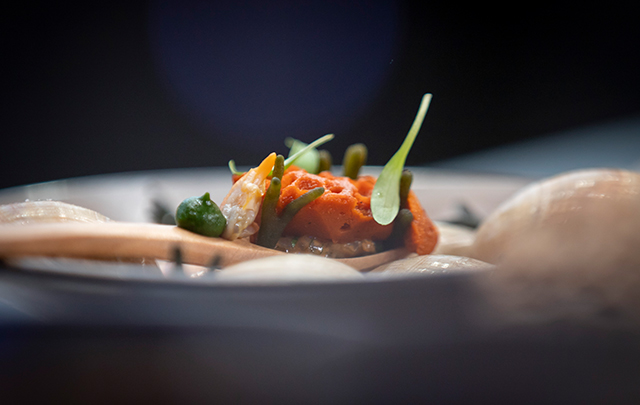
A philosophy inspired by nature
Gil Fernandes' cuisine, nestled between cliffs and forests, draws on local produce that the chef gathers with his own hands
News
All the flavours of Peru on one table
Chef Pía León researches the uses of little-explored ingredients, which she also uses not only for cooking in her restaurant Kjolle
News

Genetic vertigo to create the food of the future
José Miguel Mulet, Professor of Biochemistry and Molecular Biology at the Polytechnic University of Valencia, speaks about genetic modification applied to food in the Dreams section of Madrid Fusión
News