News
Dreams#spainfoodtechnation confirms that cuisine is not disappearing, it is simply transforming
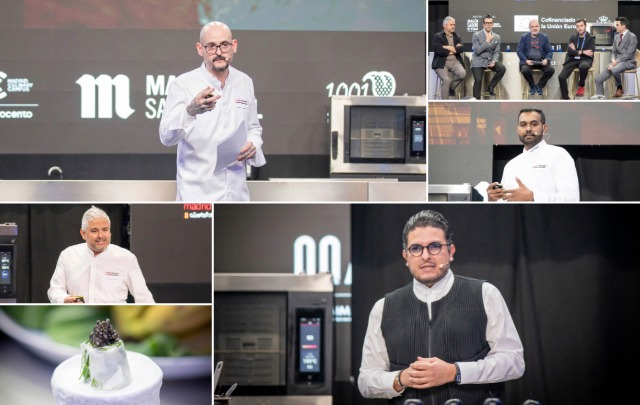
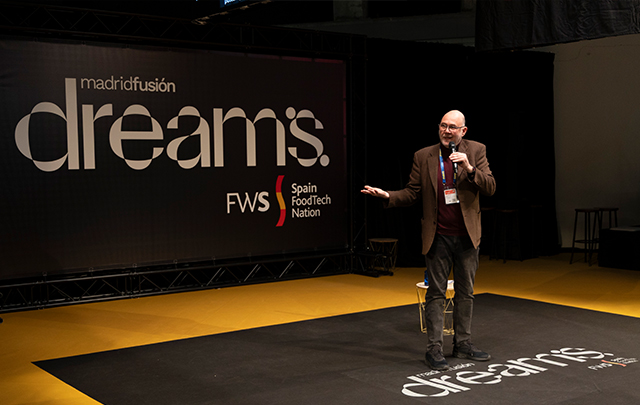
Yesterday, for the third consecutive year, Madrid Fusión Alimentos de España hosted the start of the most innovative forum of the congress, Dreams#spainfoodtechnation. Alongside the managing director of Madrid Fusión Alimentos de España, Benjamín Lana, and the director of the Alícia Foundation, Toni Massanés, coordinator of the space, Elisa Carbonell, CEO of ICEX, the main sponsor of the space since its inception, participated in the welcome for this edition. For her, ‘innovation is the only way to address the challenges facing humanity, such as health and sustainability. Because eating’, she said, ‘is not a mere formality, and if Spain wants to maintain its leading position, it must continue to invest heavily in foodtech’.
A good introduction to the day was the keynote speech by Juli Peretó, Professor of Biochemistry and Molecular Biology at the University of Valencia, and Researcher at the Institute of Integrative Systems Biology I2SysBio, who spoke about the secret evolutionary biology of gastronomic pleasure, demonstrating why taste is the most complex of the perceptions created by our brain. Based on findings in genetics, neuroscience, and evolutionary ecology, he explained how primates are attracted to ascorbic acid (vitamin C) despite its association with poor food quality, and lactic acid from fermentation. ‘Taste is the driving force behind human evolution, and cooking is a great evolutionary innovation; if cooking with fire made us human, learning to ferment food did so even more’, he argued, ‘because cooking makes food more chewable, digestible and nutritious, but also tastier and longer lasting’.
Home cooking is not being destroyed, it is being transformed
Dreams spent much of its first day discussing the uncertain future of home cooking and the consequences of increased consumption of processed foods. ‘First, we must learn to distinguish them and live with them’, said Gregorio Varela, Professor of Nutrition and Bromatology at the Faculty of Pharmacy of the San Pablo-CEU University in Madrid, and Director of the CEU University Institute ‘Food and Society’, concluding that ‘we live in a period of confusion and misinformation that generates rejection above all, but we must not forget that food processing began in prehistoric times. The problem is that there is now an excessive supply and a greater number of inputs, many of which are myths or fakes. We must learn to recognise the ingredients in order to differentiate between processing and ultra-processing, and empower ourselves personally and socially to avoid the abuse of critical nutrients: added sugars, sodium and saturated fats’.
‘More than 98% of households consume prepared food, in a market that is growing at twice the speed, and whose main challenge is to generate confidence in the face of homemade products’. This is how Laura Gil from WorldPanel by Numerator kicked off a round table discussion on home cooking. For Raúl Martín, CEO of the food corporation Familia Martínez, in addition to food quality, ‘it is essential that it be simple and tasty, because if it is not good, no one will buy it. That is why the industry must offer solutions that combine quality and convenience, improving technology’, he said. And speaking of cooking, ‘not only is it not disappearing, but it has become the heart of the home by integrating into the living room’, explained Manuel Delgado, strategic head of interior design at IKEA in Spain, arguing that this movement towards a multifunctional space of well-being and emotion has transformed its appearance, citing ‘home automation technology, which satisfies food lovers above all, sustainability, and warmth in materials and kitchenware’ as the most relevant trends.
And in restaurants, new models for new challenges
At a time of saturation in haute cuisine and constantly rising restaurant costs, five leading figures in the hospitality industry analysed the crisis of the traditional model in the face of new business models. The problem for Nino Redruello, chef and fourth-generation entrepreneur of the La Ancha Group, ‘is to maintain our artisan DNA and my family's legacy as tavern owners, but this becomes complicated when the structure grows. The important thing is to draw up a strategy in advance so that we can anticipate the different phases that the project will go through’. Coming from a family of fishmongers, the CEO of Pescaderías Coruñesas, Diego García Azpiroz, explained that his company maintains sustained growth by self-financing, agreeing that ‘with a strong structure it is easier to grow’, He complained that ‘costs have risen, reducing profit margins, as we try not to pass this on to the customer, because’, he asked those present, ‘when has the customer not been the focus of everything?’ Diego René, co-owner of the Beluga restaurant (Málaga), has called on customers to do their part now that ‘we are finally paying a fair price for everything, because the hospitality industry has survived by exploiting business owners, their staff, and their suppliers’. Carlos Crespo, partner in Grupo Cañadío, introduced another important element, namely ‘the relationship with investors, who must speak our language. Because, although a restaurant is a business, it is important to remain faithful to the initial strategy’. ‘In my experience, my best investor is the bank, because as long as I pay, it never gives its opinion; apart from my wife, who says yes to everything’, joked Nandu Jubany, chef at Can Jubany* (Calldetenes, Barcelona), pointing to careful diversification as the secret of his success, ‘growing intelligently to improve in all areas and, above all, never losing staff’.
And within these new forms of business, Dreams has given a voice to two brave chefs at the helm of one-person micro-restaurants, such as Martín Comamala, who serves eight diners per shift at the 539 Plats Forts restaurant in Puigcerdà (Gerona), who ‘wouldn't change the direct connection with my customers, to whom I convey my passion for the product, and for my supplier. It's a viable model because you learn to be profitable, but it can't be transferred, because the customer comes to see me’. Beatriz Pascual, who welcomes four shifts of 15 diners a week to her restaurant Almazen, located in the small village of Salinas de Añana (Álava), completely agrees. ‘The freedom to develop my passion means that creativity never runs out, even though you learn from your mistakes’, she acknowledged.
And what do young people think? The new generations and their relationship with gastronomy
The morning ended on the stage of Madrid Fusión's most groundbreaking space with a presentation dedicated to the new generations and their relationship with cooking. ‘Nowadays, “competition for attention” and the platformisation of content dominate’, said Bertran Salvador-Mata, PhD in Communication from the Universitat Pompeu Fabra in Barcelona, describing the bombardment of content suffered by young people, who approach information in a very passive way. ‘Young people are inundated with information from social media, and 60% avoid the news. Our hypothesis is that in 15 years, AI will be their main source of news, and social media will become the new entertainment TV’, ventured the expert, adding that young people prefer real, relatable content, without intermediaries, and a tone of normality that generates empathy.
It is precisely the language used by Jordi Roca, from El Celler de Can Roca*** (Girona), who has become a true influencer, has managed to achieve ‘5 million views by making a baked apple’, confessed the chef himself, who believes that his true success lies in ‘sharing my passion for cooking in a light-hearted way, and conveying that haute cuisine is neither elitist nor restrictive’. Javier Sanz and Juan Sahuquillo, from Grupo Cañitas Maite (Albacete), members of Generation Z, are committed to the same goal. In their communication, they declare themselves to be ‘familiar and democratic, always prioritising normality. A young person is a powerful loudspeaker’.
Business requirements and the sapiens customer experience
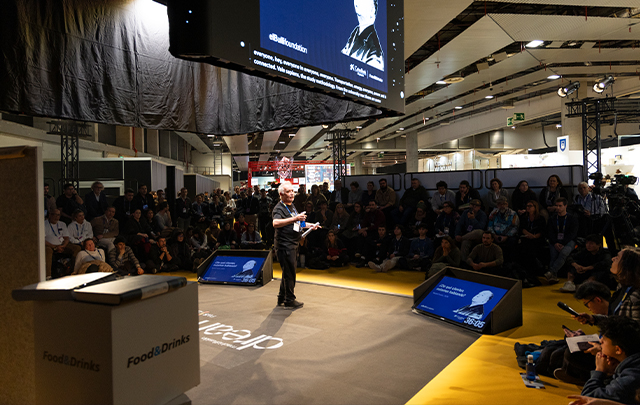
The afternoon of Dreams #SpainFoodTechNation filled the ring with great anticipation to hear from the top brass of the elBulli Foundation: Ferran Adrià, Lluís García and Ferran Centelles. In an entertaining and interactive talk, and based on the Sapiens methodology of the foundation they run, they outlined one by one the economic and operational challenges of today's gastronomic catering, pointing out useful and interesting clues to help restaurants remain competitive in an increasingly demanding and changing environment. ‘In Spain there are 3,000 gastronomic restaurants, which would require more than 54 million customers to fill them. The failure rate is very worrying, and is always due to the lack of a business plan and good management control. We need to look at the business from a cross-cutting perspective, and invest in communicating what we do in the right way’, warned Adrià, president of the elBulli Foundation.
Its managing director, Lluís García, described the customer experience in a gastronomic restaurant as ‘the most complex a human being can have in their life, because it combines the sensory with the emotional’, something that Ferran Centelles, sommelier and Wine Director of the elBulli Foundation, reasoned from his perspective as a customer ‘as the homo sapiens that he is. Our brain accounts for 2% of our body weight, but consumes 25% of the 2,000 calories the body needs daily to function’, he revealed, reviewing the different biases, stimuli and reactions to which he is subjected in the restaurant dining room, acting out scenes from everyday life in a dining room with the help of the audience.
Related news
News
Madrid Fusión Alimentos de España relaunches its leadership as a comprehensive meeting platform for the international gastronomic community
News
Toni Massanés: ‘The cuisine of tomorrow will be sustainable or it will not be
‘We spend more than two hours a day on TikTok and we can't find two minutes to make a parsley omelette’, laments the creator of the Alicia Foundation
News
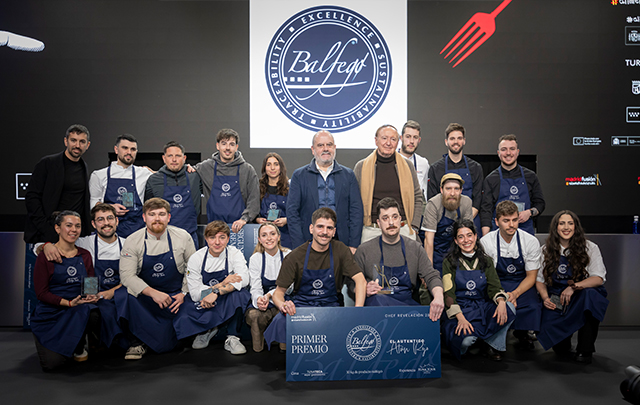
Javier Ochoa and Garikoitz Arruabarrena (Masta Taberna) win the Revelation Chef award for their haute cuisine without pretensions
News
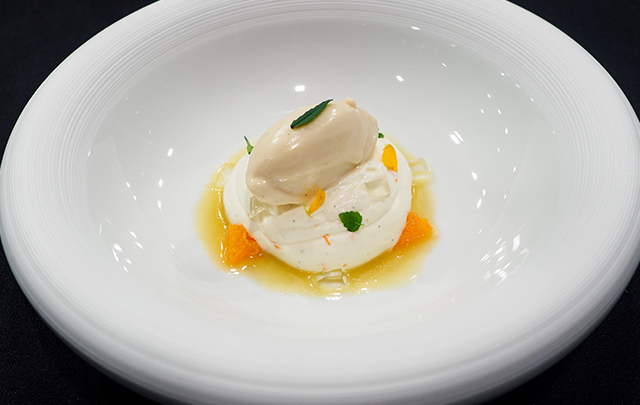
A Christmas-inspired dessert wins the Revelation Pastry Chef Award
Miguel Yeste, from the Madrid bakery Obrar, wins the coveted Madrid Fusión award
News
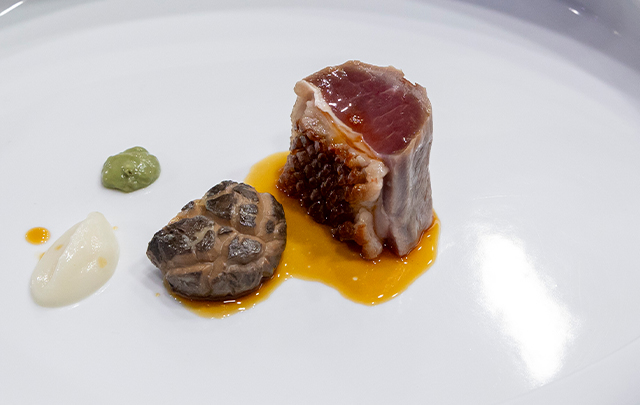
Good kilometre product
Madrid, the Neapolitan countryside, and the Philippines are stops on a gastronomic journey in which the protagonists focus on quality and relationships, rather than distance from the source
News
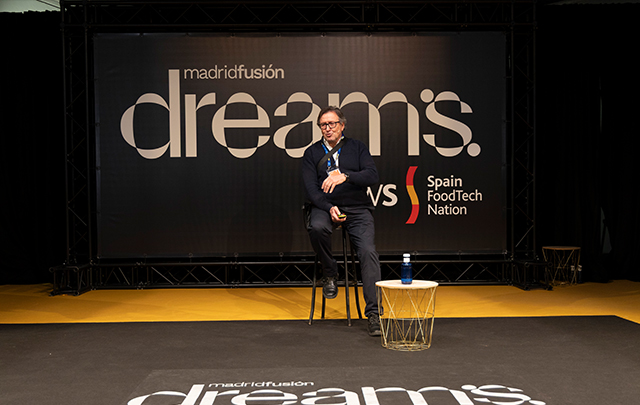
‘Salt and human health’: Science and the marine diet
Carlos Duarte reviews the millennial role of salt in well-being, health, and the economy for thousands of years at Dreams in Madrid Fusión
News
A philosophy inspired by nature
Gil Fernandes' cuisine, nestled between cliffs and forests, draws on local produce that the chef gathers with his own hands
News
All the flavours of Peru on one table
Chef Pía León researches the uses of little-explored ingredients, which she also uses not only for cooking in her restaurant Kjolle
News

Genetic vertigo to create the food of the future
José Miguel Mulet, Professor of Biochemistry and Molecular Biology at the Polytechnic University of Valencia, speaks about genetic modification applied to food in the Dreams section of Madrid Fusión
News