News
‘Cooking is not just about ingredients and techniques, but also about the diner's emotions’
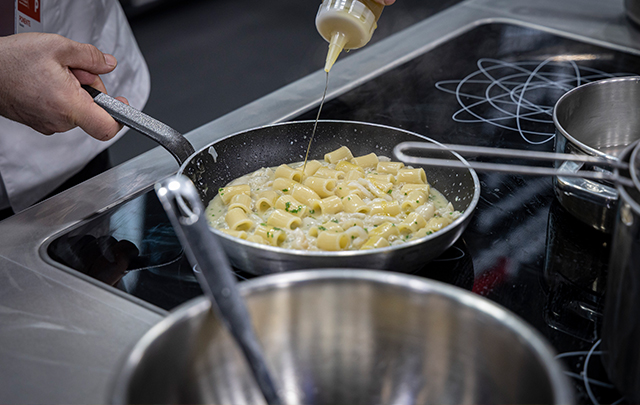
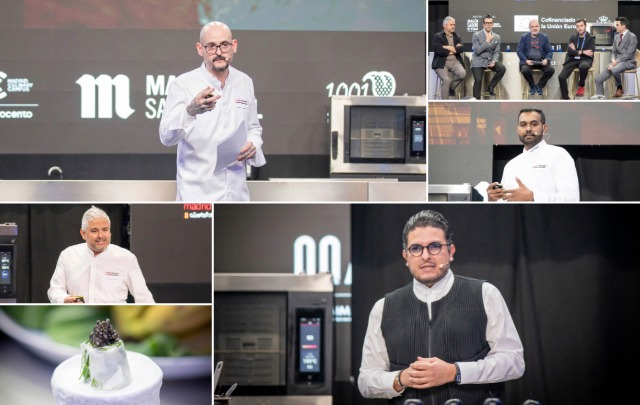
Mauro Uliassi (Uliassi Restaurant *** Senigallia, Italy) explains, in his third appearance at Madrid Fusión, how the customer's experience and satisfaction are influenced by factors such as preconceptions, memories, or each person's personal circumstances when enjoying each dish
Journalist Luca Laccarino was responsible for introducing him, placing his cuisine at the pinnacle of Italian gastronomy. This is a well-deserved recognition for Mauro Uliassi, who boasts three Michelin stars at the restaurant that bears his name in Senigallia (Italy).
Under the title “The gastronomic experience is a relationship”, the Italian chef's presentation focused on the importance of factors that have nothing to do with cooking when it comes to enjoying a culinary experience. Uliassi pointed out that ‘the meaning of cooking lies not only in the dish and its preparation, but above all in the connection, the fusion between the dish and the person eating it. This becomes an inseparable relationship, a state that must be shared. And in this connection, memory, the body and the moment come into play’.
The concept of “convivium”, ‘the place where all the elements and relationships created in the culinary activity come together’, was also important, as it explains well how ‘chef, dish and diner become inseparable’ when all the elements that are part of the gastronomic experience come together and intertwine.
But Uliassi wanted to emphasise that he cannot predict whether the diner ‘will be more or less tired that day, whether they will be in the right emotional state to eat or whether they will have argued with a colleague. In other words, whether their senses will be ready to receive pleasure’. Situations that ‘will change their experience’. For these reasons, ‘cooking does not only work with ingredients and technique, but also with the diner's emotions’.
In this way, ‘the chef prepares a potential state, the diner materialises it. And this is where the diner takes control, not because they decide the menu, but because without them, the dish would be incomplete’. To do this, they rely on their five senses, which means that ‘each diner processes and experiences the dish differently’.
Another important factor is prejudice, ‘a filter that distorts the senses and completely alters the experience. It can work in our favour or completely destroy all our work. It can make us love even a mediocre dish or reject what could be a masterpiece. And deactivating or feeding prejudices, if they are positive, is one of the most delicate tasks in our profession. It is not about technique, but about relationships and hospitality. This is where the extraordinary work done in the dining room comes into play: empathy, naturalness, trust, sincere hospitality, and the human touch’.
In short, ‘the chef does not cook dishes, but rather conditions that prepare a space for something to happen. And when someone is willing, a dialogue arises between the chef and the diners’.
Two recipes
Uliassi lit up the kitchens of Madrid Fusión to present two dishes from his menu that clearly explain his idea of cooking. He started with “Ossobuco alla marinara”, a dish that ‘expresses the strong traditions of land and sea typical of the inhabitants of the Adriatic coast’. Ossobuco bone, clam broth, cod tripe, parsley, basil, and celery seeds are some of the ingredients in a dish that is ‘highly impactful and very sensual’ that they created in 2022. The second proposal could only be pasta. In this case, “mezze maniche”, a dish of ‘great intensity and strength, with depth’. This dish is made with typical dry pasta, cod tripe, cheese, pepper, and onion jam.
The Italian chef pointed out that ‘these are dishes without much sophistication, but with extraordinary intensity on the palate’ because, for him, ‘cooking is, above all, about the mouth, the palate’.
Related news
News
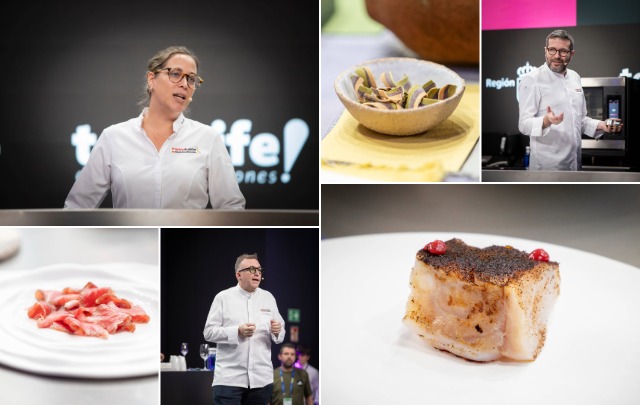
Madrid Fusión Alimentos de España relaunches its leadership as a comprehensive meeting platform for the international gastronomic community
News
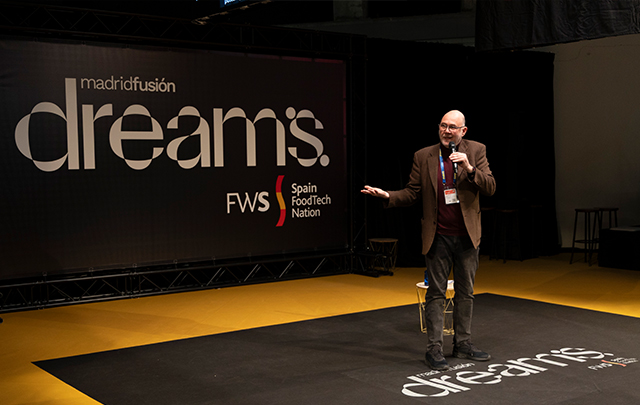
Toni Massanés: ‘The cuisine of tomorrow will be sustainable or it will not be
‘We spend more than two hours a day on TikTok and we can't find two minutes to make a parsley omelette’, laments the creator of the Alicia Foundation
News
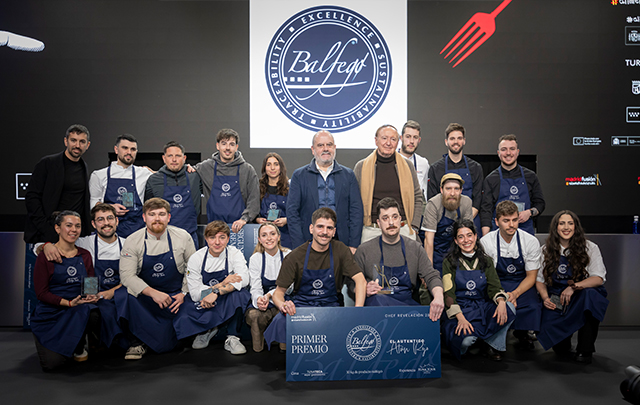
Javier Ochoa and Garikoitz Arruabarrena (Masta Taberna) win the Revelation Chef award for their haute cuisine without pretensions
News
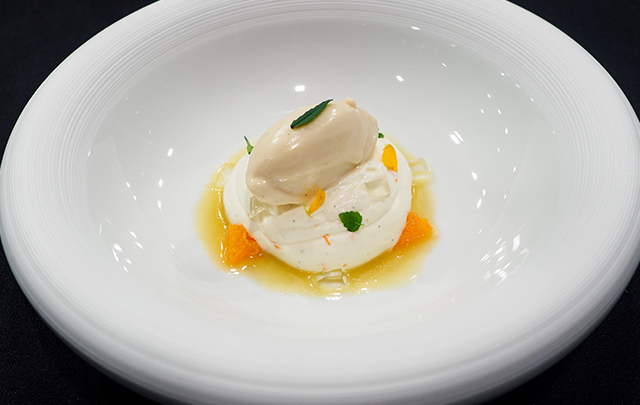
A Christmas-inspired dessert wins the Revelation Pastry Chef Award
Miguel Yeste, from the Madrid bakery Obrar, wins the coveted Madrid Fusión award
News
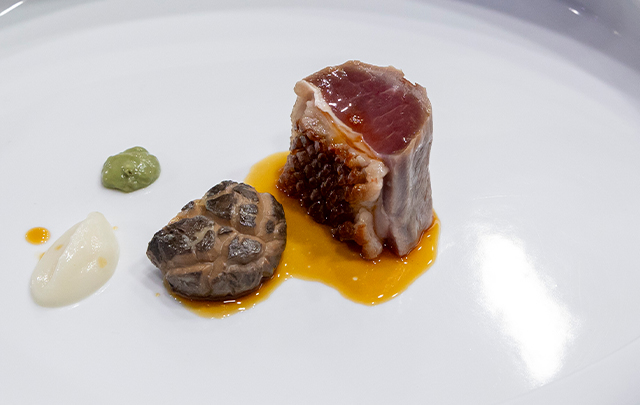
Good kilometre product
Madrid, the Neapolitan countryside, and the Philippines are stops on a gastronomic journey in which the protagonists focus on quality and relationships, rather than distance from the source
News
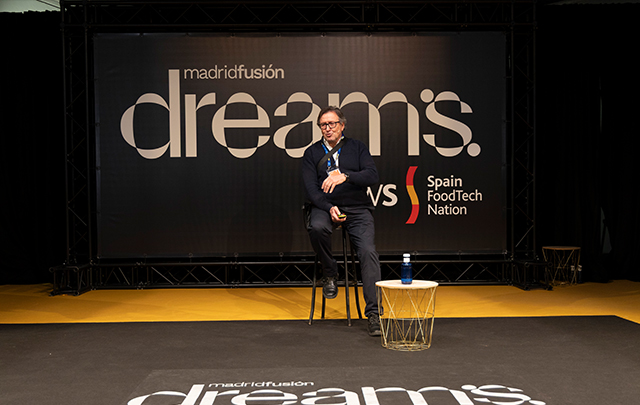
‘Salt and human health’: Science and the marine diet
Carlos Duarte reviews the millennial role of salt in well-being, health, and the economy for thousands of years at Dreams in Madrid Fusión
News
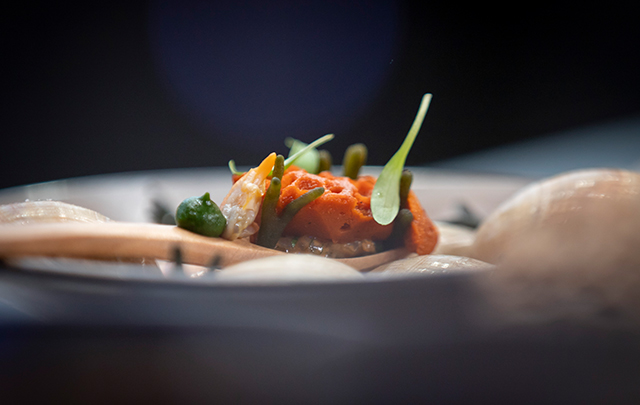
A philosophy inspired by nature
Gil Fernandes' cuisine, nestled between cliffs and forests, draws on local produce that the chef gathers with his own hands
News
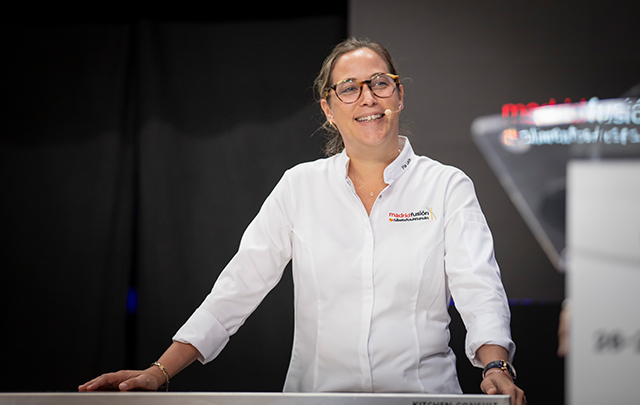
All the flavours of Peru on one table
Chef Pía León researches the uses of little-explored ingredients, which she also uses not only for cooking in her restaurant Kjolle
News

Genetic vertigo to create the food of the future
José Miguel Mulet, Professor of Biochemistry and Molecular Biology at the Polytechnic University of Valencia, speaks about genetic modification applied to food in the Dreams section of Madrid Fusión
News