News
A journey through conceptual and regional cuisine
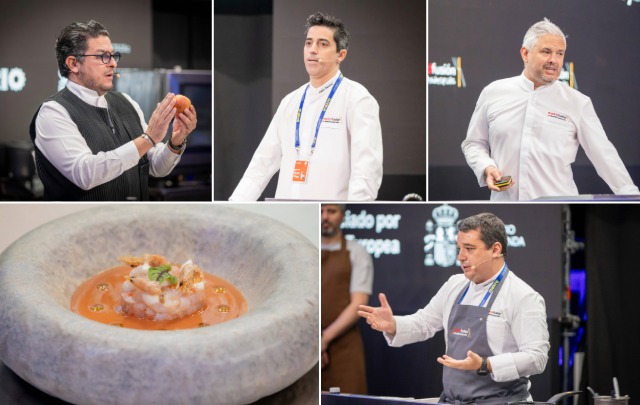
From Murcia and Malaga to Paris and Rio de Janeiro, the second day of Madrid Fusión Alimentos de España began with a journey through cuisines as diverse as they are interesting
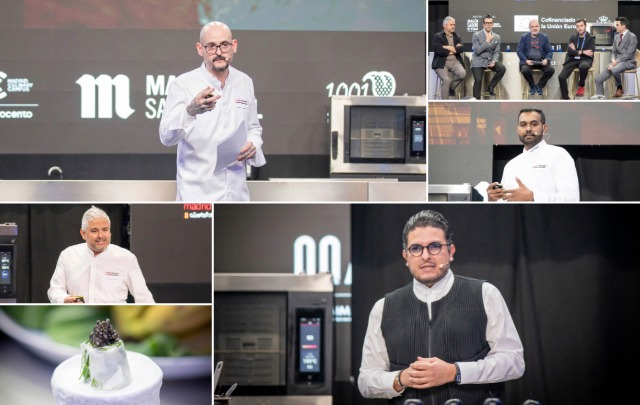
The second day of Madrid Fusión Alimentos de España kicked off with “Cooking memory and time”, led by Murcia-born chef Alejandro Ibáñez (Barahonda Restaurant * Yecla, Murcia). Sponsored by 1,001 Flavours of Murcia, this first presentation allowed the audience to travel to the interior of the Region of Murcia, specifically to Yecla, where Barahonda, an extension of the winery of the same name, is located. Environment and memory merge in Ibáñez's gastronomic proposal, as his cuisine updates traditional recipes. ‘Without memory, we are nothing. We are memories, and that conditions the way we are, the way we think and, of course, the way we cook. We collect those memories and bring them up to date’, he said of a culinary essence that ‘does not consist of deconstructing or reinterpreting dishes, but rather of compiling the history, sensations, flavour, and texture of a recipe and, based on that, creating a dish that evokes and captures those sensations and memories’.
To embody this philosophy based on ‘being inspired by memory, but cooking in the present’, he presented two haute cuisine creations inspired by two typical dishes from the Murcian recipe book: caballito and caldo con pelotas.
Discovering seafood offal
There was also time in the morning session to look to the sea with Pablo Sánchez (Los Marinos José Restaurant, Málaga), a newcomer to the conference, who runs a restaurant dedicated exclusively to fish and seafood located on Carvajal beach in Fuengirola; an establishment that José Carlos Capel described as ‘one of the temples of fish in Spain’.
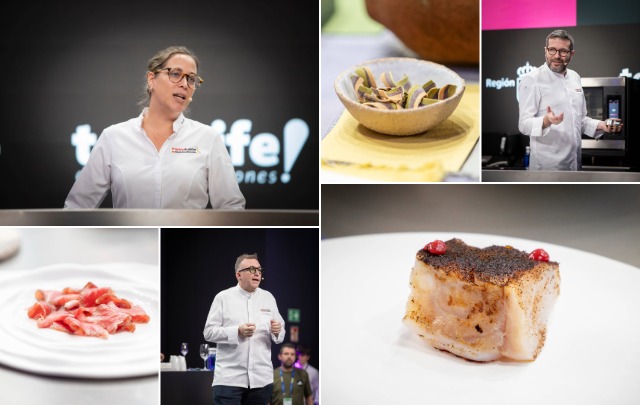
A presentation that focused on discovering seafood offal which, according to Sánchez, ‘has never been valued as it is now’ and which Capel himself said ‘should be called seafood “jewellery”’. The fact is that offal, as a recipe for making the most of leftovers, is not exclusive to meat, but also to fish, with roe and livers as the main ingredients. The chef brought a sample of several of them from different fish (sea bream, red mullet, John Dory - his ‘fetish’ - etc.) to the Auditorium, presenting the many options for cooking and tasting them. There was time for tasting roe in four styles - semi-cured, truffled, with seaweed powder and smoked paprika - after explaining the preparation process that he carries out himself from start to finish, with special emphasis on obtaining and curing: ‘The fact that we remove the roe is not a question of price, but of doing things with love. It's hard work, but it's worth it for the happiness you get from eating them’.
The “ingredients” of the Jubany empire
Shortly before midday, it was the turn of one of the most versatile chefs on the national scene: Nandu Jubany. ‘Always going against the grain, he has been able to build everything in a different way, with a lot of intuition and hard work, achieving dizzying successes’, said Benjamín Lana, before giving way to his inspiring and frenetic presentation entitled “The recipe for these 30 years”, which consisted of a chronological journey through the construction of what is now the Jubany empire, ‘a powerful industry that cuts across the entire hospitality sector’.
The Jubany world began to take shape in 1995 with a “classic” restaurant focused on “making diners enjoy themselves” and with the clear understanding that “our customers had to be part of our family”. It was the first stone in a structure that diversified into celebrations, events, ready-to-eat cuisine... also growing geographically with projects in different parts of the world. ‘It has been a path strewn with roses, but with thorns included; it has not been easy’, confessed the chef, referring to these 30 years that have taught him a lesson: ‘Dreams don't come for free, you have to work for them, because nobody gives anything away’.
Unflappable, Jubany said he had ‘important’ projects for the coming year ‘because I like to do things, to be an entrepreneur, to build teams, to learn from people who know... that's the recipe for these 30 years’, he confessed before leaving us with an important final reflection on the customer: ‘I have always been clear that customers are and will be the main ingredient of any business; without them there is no restaurant or business’.
The art and utility of cooking
As the morning progressed, the event took on an international flavour. One of the stops was Paris, courtesy of an old acquaintance of the conference, Akrame Benallal (Akrame*), and his presentation “Making the edible useful”. This consisted of the preparation of a peculiar dessert based on a striking black apple, through a process whereby ‘a decorative object becomes a source of light and then a dessert to share. The apple, covered in beeswax, serves several purposes before becoming completely edible’. An ‘interesting, delicious and flavourful dish, without being too complicated’ that perfectly reflects a way of working that ‘has evolved over time. Because the older we get, the more we try to eliminate many gestures and focus on the essentials’.
The French-Algerian chef, whom Juanma Bellver considered one of the ‘most restless and inimitable’ on the international scene, showed with this black apple his predilection for a colour ‘that has been part of my work for years as a tribute to Pierre Soulages, an incredible and very contemporary artist’ whom ‘I always try to keep in mind; he inspires me’. Other sources of inspiration for him are fashion and aesthetics: ‘I like aesthetics to serve cuisine, and not the other way around’.
Looking at the Rio de Janeiro vegetable garden and, soon, the sea
The world tour stopped off in Rio de Janeiro, the international guest destination of this year's Madrid Fusión Alimentos de España, with a first-class host in Rafa Costa e Silva (Lasai**). In his presentation “Rio, from January to December”, the Brazilian chef presented the foundations of a cuisine that ‘listens to the most important territory in my life -Rio de Janeiro-’ through a project he launched 12 years ago ‘without pretensions or marketing; just a lot of hard work, perseverance and friends’.
Costa e Silva prepared three ‘very fresh and easy to eat’ appetisers while explaining that ‘the vegetable garden is an essential part of Lasai. We have our own vegetable garden with a very clear concept: we don't want to compete with producers, but rather to grow what we can't find in Rio's organic markets’. Although vegetables are the main focus at this restaurant, the chef announced that a second project will be launched in September that will look not only to the vegetable garden, but also to the sea: ‘We are going to open a new restaurant, located in front of the beach, which will combine vegetables and fish, seafood’. It will be a dream come true for the Rio de Janeiro-born chef, who confessed that ‘when I started cooking, I never imagined I could achieve this. This restaurant is something I always dreamed of, and in September it will become a reality’.
Related news
News
Madrid Fusión Alimentos de España relaunches its leadership as a comprehensive meeting platform for the international gastronomic community
News
Toni Massanés: ‘The cuisine of tomorrow will be sustainable or it will not be
‘We spend more than two hours a day on TikTok and we can't find two minutes to make a parsley omelette’, laments the creator of the Alicia Foundation
News
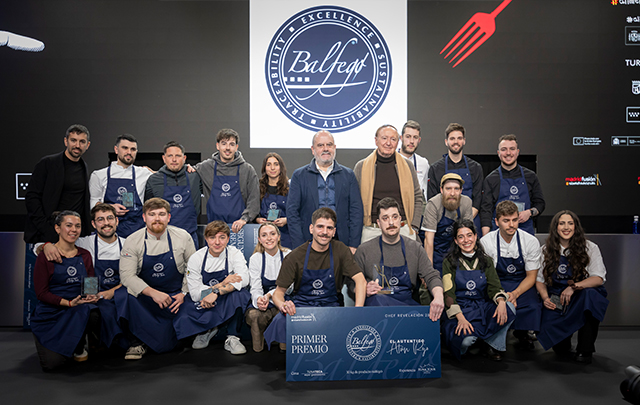
Javier Ochoa and Garikoitz Arruabarrena (Masta Taberna) win the Revelation Chef award for their haute cuisine without pretensions
News
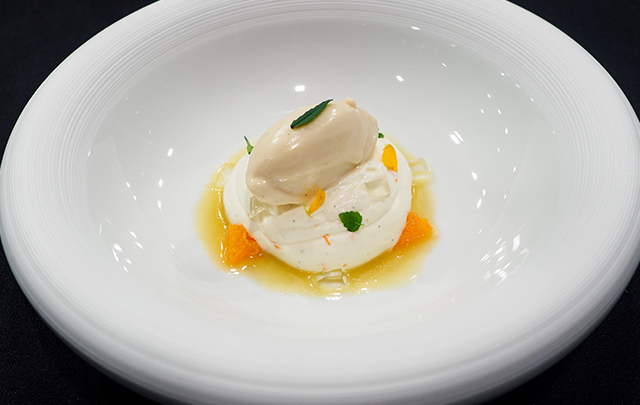
A Christmas-inspired dessert wins the Revelation Pastry Chef Award
Miguel Yeste, from the Madrid bakery Obrar, wins the coveted Madrid Fusión award
News
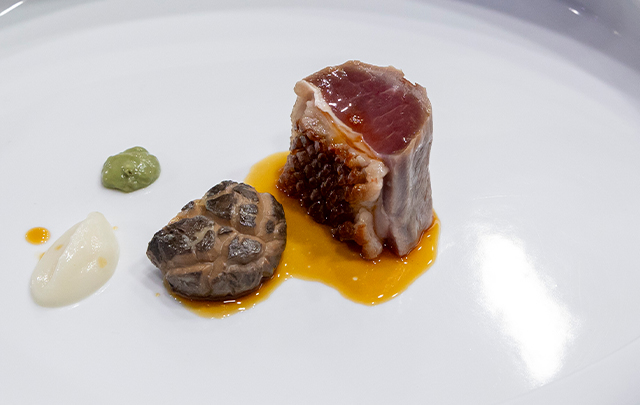
Good kilometre product
Madrid, the Neapolitan countryside, and the Philippines are stops on a gastronomic journey in which the protagonists focus on quality and relationships, rather than distance from the source
News
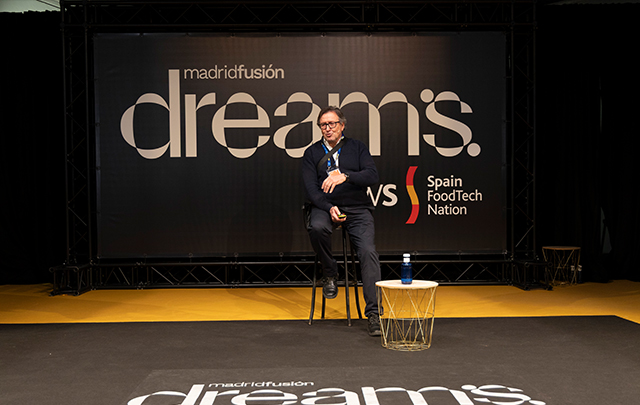
‘Salt and human health’: Science and the marine diet
Carlos Duarte reviews the millennial role of salt in well-being, health, and the economy for thousands of years at Dreams in Madrid Fusión
News
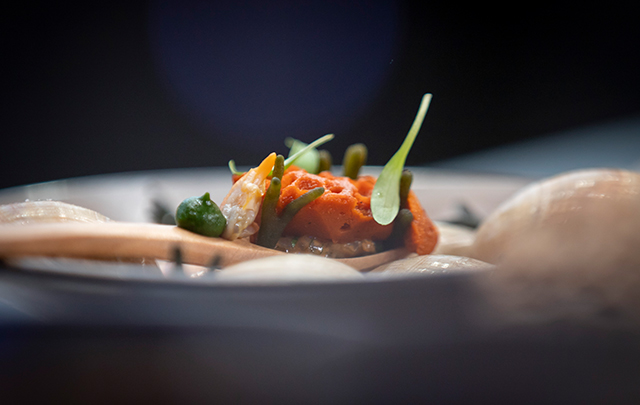
A philosophy inspired by nature
Gil Fernandes' cuisine, nestled between cliffs and forests, draws on local produce that the chef gathers with his own hands
News
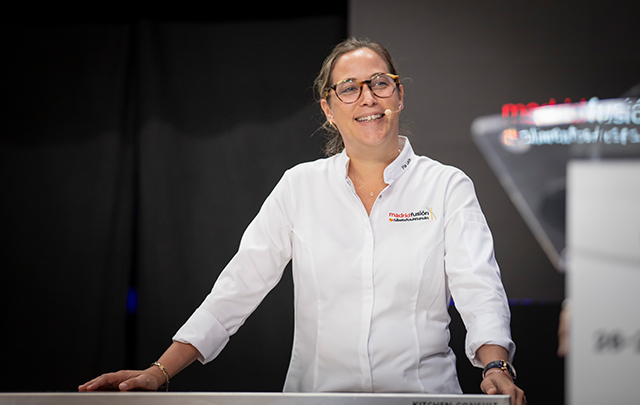
All the flavours of Peru on one table
Chef Pía León researches the uses of little-explored ingredients, which she also uses not only for cooking in her restaurant Kjolle
News
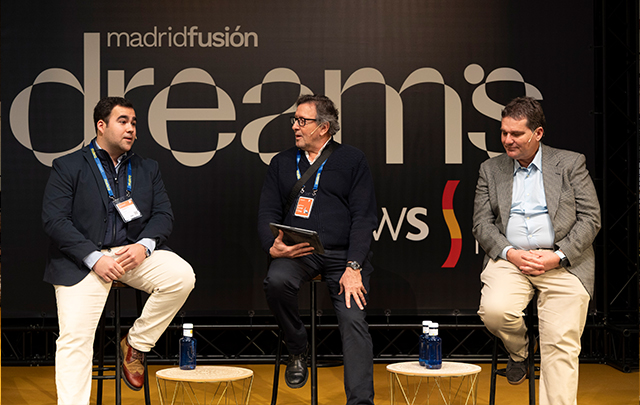
Genetic vertigo to create the food of the future
José Miguel Mulet, Professor of Biochemistry and Molecular Biology at the Polytechnic University of Valencia, speaks about genetic modification applied to food in the Dreams section of Madrid Fusión
News